

Small Cost, Big Impact: How Targeting Fugitive Emissions Can Support Canada’s Sustainability Mission, Without Sacrificing Production
Canada finds itself in a challenging position, albeit in a position with immense potential and opportunity.
The country is determined to lead the way in reducing emissions, despite its commitment to nationwide oil and gas activity, which is its largest source of emissions. With gas production at record highs and new activity planned to meet domestic and international demand, action is needed to minimize ongoing and future environmental impact.
Pipelines – both those established and those in construction – will be integral in supporting Canada’s export ambitions. And they also present a great opportunity to target emissions.
Fugitive emissions, such as pipeline leaks, are a significant pain point and cause of concern because of their reputation for often going undetected and being underreported, and with the risk of methane seeping into the atmosphere throughout the transportation and distribution of produced gas, more should be done to target these leaks and stop their environmental and safety consequences. Enter PipeSense’s advanced leak detection and prevention: a significant step forward.
Commitment Issues: Canada’s Conflict Between Sustainability and Production Production
Over the past several years, Canada has continued to strengthen its position as a leading natural gas producer, with production growth driven primarily by Alberta and British Columbia, and supported by Saskatchewan. As a net exporter responsible for roughly five percent of global natural gas production, this momentum is critical to maintain. Canada’s reputation as a reliable and responsible energy supplier contributes billions of dollars annually to the national economy and supports more than 450,000 direct and indirect jobs, many of them in rural and remote regions across Western Canada.
The vast majority of Canada’s natural gas exports are delivered to the United States through an extensive pipeline network spanning more than 840,000 kilometers of transmission, gathering, and distribution infrastructure. These pipelines traverse nearly every province, enabling the safe and efficient movement of energy that powers businesses, communities, and the daily lives of tens of millions of Canadians.
Building on this historic and trusted pipeline foundation, Canada is now expanding its global reach. In 2025, the country’s first large-scale LNG export facility commenced operations on the West Coast, marking a significant milestone that positions Canadian natural gas to serve international markets while reinforcing the country’s role as a long-term, dependable energy supplier.
Alongside Canada’s historic and trusted pipeline networks, incredible new systems are continuously developed, most recently Canada’s first LNG export facility, launched on the West Coast in 2025.
The scale of Canada’s pipeline network demonstrates its commitment to hosting a reliable and robust energy infrastructure that meets domestic and international demand, while powering major cities and the economy at large. In short, it’s not something to be taken lightly or simply switched off – even if it is, at times, in conflict with sustainability efforts.
Alongside oil production, gas production is Canada’s largest source of emissions. A widening gap between emission levels and 2030 targets, as well as burgeoning capacity for LNG production, have contributed to Canada’s sustainability rating being downgraded by the Climate Action Tracker. As a collective, the industry needs to target all sources of unnecessary emissions – big and small – if it is to continue balancing production with net-zero ambitions.
Sustainability
While Canada isn’t unique in its position to support net-zero ambitions globally, it is, however, facing a more severe challenge than many of its western counterparts.
Reporting from earlier this year suggested that Canada is warming faster than twice the global average, and even more so in the northern parts of the country. Although 2026 is expected to maintain the severe heat experienced over the last three years, Canada remains undeterred in its efforts to limit the implications of a warming climate.
Under the Canadian Net-Zero Emissions Accountability Act, Canada’s leaders outlined the goal of reducing emissions by 40-45% below 2005 levels by 2030, to conserve 30% of of its lands and oceans by 2030, and to achieve net-zero emissions by 2050. Within the Canadian Net-Zero Emissions Accountability Act, initiatives such as carbon pricing, phasing out coal-fired plants to instead generate clean electricity, and long-term carbon capture plans.
In the oil and gas industry, despite production being close to record levels in 2025, progress has still been made. Emission-reduction technologies, processes, and collaborative efforts led by major operators throughout the production-intensive provinces of Alberta, British Columbia, Saskatchewan, and Newfoundland and Labrador has resulted in the decline of emissions per unit of production across the majority of industry subsectors over the last 20 years.
However, it’s within the ambitions to cut methane emissions by a minimum of 30% (below 2020 levels) by the end of the decade, that presents some of the greatest opportunities for the world’s fourth-largest oil producer and fifth-largest producer of gas to make a long-term difference.
Industry Oversight? How Gas Pipeline Leaks are Limiting Progress
Reporting from the Environment and Climate Change Canada (ECCC) has found that methane emissions account for approximately 16% of Canada’s total emissions. From there, an estimated 48% of methane emissions originate within the oil and gas industry, with the majority (some reports suggest 40%) caused by fugitive emissions, A.K.A. leaks; a completely avoidable problem that industry specialists like PipeSense and Monitor Emissions have made their mission to target.
Pipeline leaks are a universal problem, caused by a myriad of common factors including corrosion, environmental factors (extreme weather, soil erosion), the effects of the passage of time on ageing infrastructure (much of Canada’s existing pipeline networks were built during a period of significant expansion from the 1950s onwards), and third-party interference.
Add these factors together and it’s no surprise that methane-emitting leaks are a common occurrence. Beyond the environmental impact of these leaks is the cost; upwards of $500 million worth of product could be lost annually.
But that’s just on the surface. Reports from Canada’s National Observer (CNO) previously found that Canada, like many other nations, have underreported methane leaks and emissions, estimating leaks could be as much as 50% higher than reported.
If gas production is to ramp up as expected, then even more pressure will be placed on existing infrastructure and the midstream industry at large, generating a higher risk of pipelines leaks and subsequently, methane emissions.
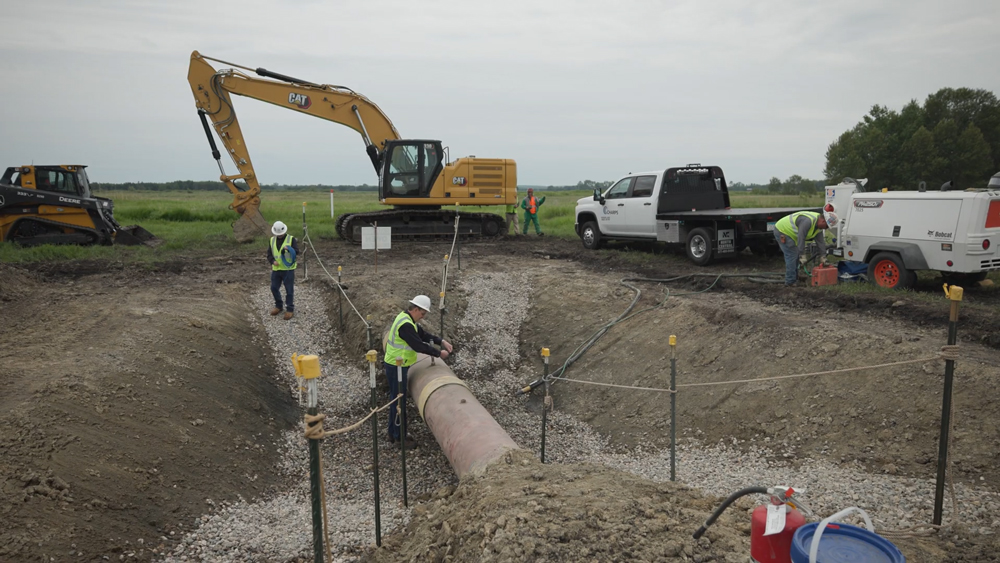
This isn’t limited to older systems; even new builds and ongoing construction can be the culprit behind leaks through operational oversight and errors in on-site procedures, obstruction and damage caused by third parties (heavy equipment, excavation).
New developments, including LNG output, will add immense value to Canada’s industries and the future of its homegrown energy mix, but they also add more stress to infrastructure, resources, and overall carbon footprint.
Maintaining the already established network of pipelines while safeguarding future systems is a critical task for Canada. Regular monitoring, start-to-finish integrity strategies, and prioritizing leak detection are all essential actions to keep pipeline systems in peak operating conditions.
However, are processes and partnerships in place to target fugitive emissions before the damage is done?
Finding a New Way Forward
Rather than being seen as a limit or handbrake on production and industry progress, tackling emissions – whether fugitive or any other – actually creates a new ecosystem of opportunity for the supply chain. Emission-based regulations and abatement policies are the spark to creating a new world of innovation, where solutions, processes, and technologies have been developed to responsibly maintain production rates and ambitions, helping companies like PipeSense and Monitor Emissions enter and subsequently transform the market.
Canada’s Measurement, Monitoring, Reporting and Verification framework (MMRV) is a testimony to the meeting point between innovation and collaboration, where Government and industry working groups coordinate initiatives to reduce emissions across the supply chain. Additionally, collaboration between provinces and territories is rife, with key involvement from Indigenous Peoples and Communities, industry leaders, and the workers shaping its future.
Focused Partnerships: PipeSense and Monitor Emissions
Of the varying ways to tackle industry emissions, targeting fugitive emissions is a low-cost, high-impact opportunity, especially in comparison to more severe excavation and overhaul work. Measures and activities based around pipeline leaks are particularly effective, utilizing the latest technological advances to monitor systems and reduce fugitive emissions.
This is why PipeSense, the U.S.-based provider of advanced asset integrity and maintenance solutions and technology platforms, expanded its scope of support to the Canadian market.
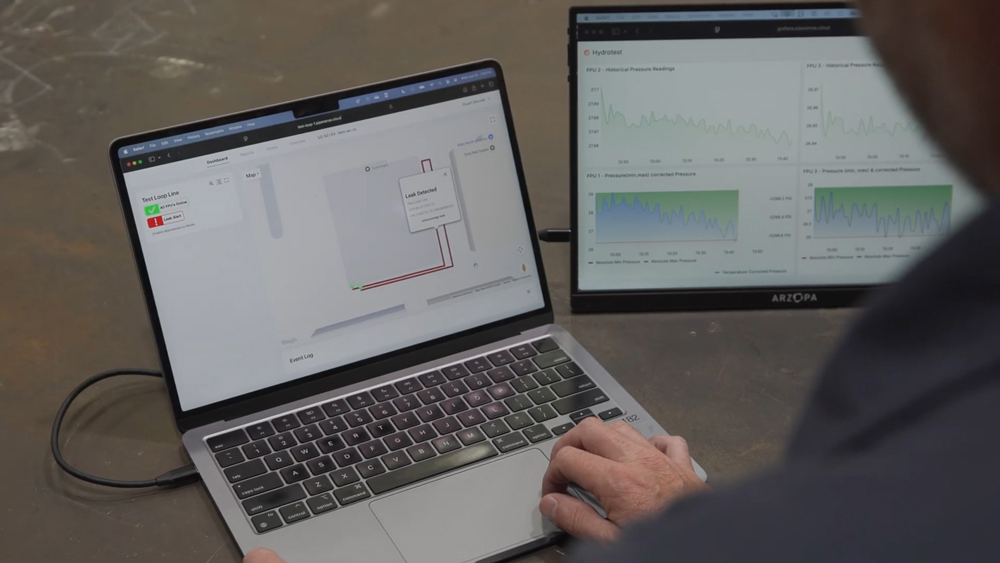
Following an exclusive partnership agreement with Indigenous-owned Canadian industrial inspection specialist Monitor Emissions, PipeSense now provides its full suite of in-house engineered leak detection (PipeGuard), obstruction locating (PipeScan), pig-tracking (PipeTrack), and hydrotesting (PipeTest) technologies across all provinces and territories in Canada. The availability of these solutions serves to bolster national plans of targeting fugitive emissions in the midstream industry through access to innovative and proven solutions.
PipeSense’s decision to partner with an Indigenous-owned company is no coincidence. Monitor Emissions, a partner of pipeline and facilities construction and maintenance leader Sundown Oilfield Services, brings a proven and respected presence across the Canadian market. Driven by a shared vision to deploy the industry’s most advanced asset integrity and leak detection technologies, this partnership represents a powerful alignment of expertise, values, and cutting-edge capability. Through their close partnership, Monitor Emissions and Sundown offer a fast, end-to-end solution for pipeline issue detection, location, and repair.
Canada’s stunning environment is a source of national pride and an international hallmark of the country’s identity. Few understand this deeper than Indigenous communities, who have been stewards and champions of their surrounding environments for generations, leading the way in conservation.
Often disproportionately affected by rising emissions and their consequences, Canada’s Indigenous communities have helped governing bodies, operators, and industry leaders maintain responsible construction, lending their voices, resources, and support to guide processes and development patterns. These voices are fundamental in the industry, with approx. 13,000 in employment, making oil and gas one of the largest employers of Indigenous Peoples in Canada.
To safeguard plans for ongoing pipeline development, Indigenous consultation has been critical and utilized through engagement for project management and planning, ongoing pipeline monitoring, and general environmental awareness within the midstream industry.
When looking to expand into the Canadian market, this was a key consideration for PipeSense’s leadership team to partner with industry leaders committed to bringing solution to operators throughout the country. Monitor Emissions was an obvious choice, due to leadership and expertise.
The integration of PipeSense’s proprietary technologies extends Monitor Emissions’ capabilities to pipeline infrastructure, building its already advanced facility asset integrity and leak detection offerings. Together, these technologies enable Monitor Emissions to address sources of process issues and fugitive emissions across the oil and gas sectors.
United by a shared commitment to advancing industrial efficiency, safety, and environmental impact, PipeSense and Monitor Emissions are set to drive transformation across industrial operations, amplifying their offerings through shared technologies, techniques, and hands-on experience.
Josh Holmes, Vice President of Business Development – PipeSense



What does it take to be PipeSense Certified?
A LOT, and that’s by design. Explore what our quality seal means to us and, more importantly, what it means for you. (Hint: More free time, less frustration.)