PipeSense Opens Cutting-Edge Pipeline Leak Detection Test Facilities in Houston and Minnesota

PipeSense Expands Capabilities with New Pipeline Leak Detection Facilities in Houston and Clearbrook

HOUSTON, TX – In a bold step forward for the future of pipeline safety, PipeSense has officially opened the doors of two new state-of-the-art testing facilities. Located in Houston, Texas, and Clearbrook, Minnesota, the facilities mark a major milestone in PipeSense’s mission to revolutionize pipeline monitoring and leak detection through advanced technology, AI-driven analytics, and real-world validation.

As global pressure mounts for safer, smarter energy infrastructure, these facilities reflect the company’s deep commitment to both innovation and regional investment.

Accelerating R&D with Real-World Testing Environments

PipeSense’s Houston facility features a fully operational 4-inch Continuous Test Loop, uniquely designed to simulate active leak scenarios. This system enables real-time client demonstrations and custom leak point selection—ensuring transparency, trust, and technical proof of performance.

In Clearbrook, Minnesota, PipeSense has constructed a bespoke 24-inch Pipeline Test Rig, designed specifically for evaluating and showcasing real-time pig-tracking and inline inspection technologies—a vital capability for midstream operators managing large-scale pipelines.

By simulating realistic field conditions, both facilities allow PipeSense’s engineering teams to test, refine, and continuously evolve both hardware and software solutions.

Investing in Pipeline Safety Across North America

With a strategic presence in both the Gulf Coast energy hub and the Midwestern pipeline corridor, PipeSense’s new facilities serve as dual anchors for nationwide service delivery and regional support.

This geographic reach is critical as the industry prepares for stricter federal mandates such as the PHMSA Leak Detection and Repair Rule, which requires hazardous liquid pipeline operators to implement more effective leak detection systems.

According to API 1130, effective leak detection is not only about fast response times—it also hinges on continuous monitoring, advanced algorithms, and site-specific adaptability. PipeSense’s hands-on testing environments directly support these standards, enabling operators to deploy field-ready, regulation-compliant solutions with confidence.

A Message from PipeSense Leadership

“The opening of our world-class testing facilities will allow us to embark on a period of continued investment into the technologies we provide as part of our advanced pipeline leak monitoring solutions,” said Stuart Mitchell, President and CTO of PipeSense. “The research done at our facilities will help to ensure we are continually at the forefront of technological advancement and AI integration. We look forward to welcoming clients to our facilities and offering live demonstrations to showcase our capabilities.”

Navigating the PHMSA Leak Detection Mandate: What Pipeline Operators Need to Know Before October 2024

Navigating Industry Change: The PHMSA Leak Detection Mandate

A major shift is underway in the U.S. pipeline industry. Starting October 1, 2024, all operators of hazardous liquid pipelines must comply with a new federal leak detection mandate issued by the Pipeline and Hazardous Materials Safety Administration (PHMSA) under 49 CFR 195.134.

For many pipeline owners and operators—particularly those managing aging infrastructure—this marks a critical turning point in pipeline safety, operational risk management, and regulatory compliance.

What the New PHMSA Leak Detection Rule Requires

Under § 195.134, hazardous liquid pipelines transporting single-phase liquid constructed before October 1, 2019, must be equipped with effective leak detection systems by the looming October 2024 deadline.

Key Requirements:

  • Scope: Applies to all onshore liquid pipelines operating in a single phase (liquid without gas).

  • Compliance Deadline:

    • Pipelines constructed before October 1, 2019 must comply by October 1, 2024.

    • Pipelines constructed on or after October 1, 2019 should have already complied by October 1, 2020.

  • CPM Systems: Any new or replaced Computational Pipeline Monitoring (CPM) components must be designed per API RP 1130 section 4.2, ensuring real-time, high-fidelity leak monitoring.

  • Exemptions: Offshore gathering and regulated rural gathering lines are excluded from this rule.

Why This Matters: Compliance, Safety & Liability

Failure to comply with the PHMSA leak detection requirements can result in hefty fines, operational shutdowns, and environmental liabilities. Beyond the legal ramifications, operators also face reputational and safety risks if pipeline leaks go undetected or unresolved.

In an era where public and environmental safety are paramount, real-time leak detection is no longer a luxury—it’s a legal and operational necessity.

Enter PipeGuard: Advanced Leak Detection Without the Guesswork

To support operators during this transition, PipeSense offers PipeGuard, a next-generation pipeline integrity solution designed for full compliance and peace of mind.

Why Operators Choose PipeGuard:

  • 24/7 Real-Time Monitoring – Catch leaks as they happen, no matter the cause.

  • Precise Leak Localization – Reduce downtime and environmental impact with accurate data.

  • False-Positive Protection – Smart alerts delivered only when they matter.

  • Flexible Notification Options – Via SCADA, email, SMS, and web apps.

  • Cybersecure and Scalable – Built to meet the most rigorous IT and operational standards.

PipeGuard seamlessly integrates with existing pipeline infrastructure and is ideal for operators with complex networks across North America—from the Permian Basin to the Midwest and Gulf Coast.

Countdown to Compliance: Don’t Wait Until Q4

With less than six months to meet the federal deadline, pipeline operators must act quickly to:

  • Assess current compliance status

  • Identify gaps in existing leak detection coverage

  • Implement and test approved CPM systems

PipeSense is actively working with operators nationwide to prepare for this regulatory milestone. Whether you manage legacy assets or oversee new builds, we can help ensure full compliance while optimizing safety and uptime.

Making Waves at PPIM 2024: PipeSense Showcases Innovation in Leak Detection and Pipeline Monitoring

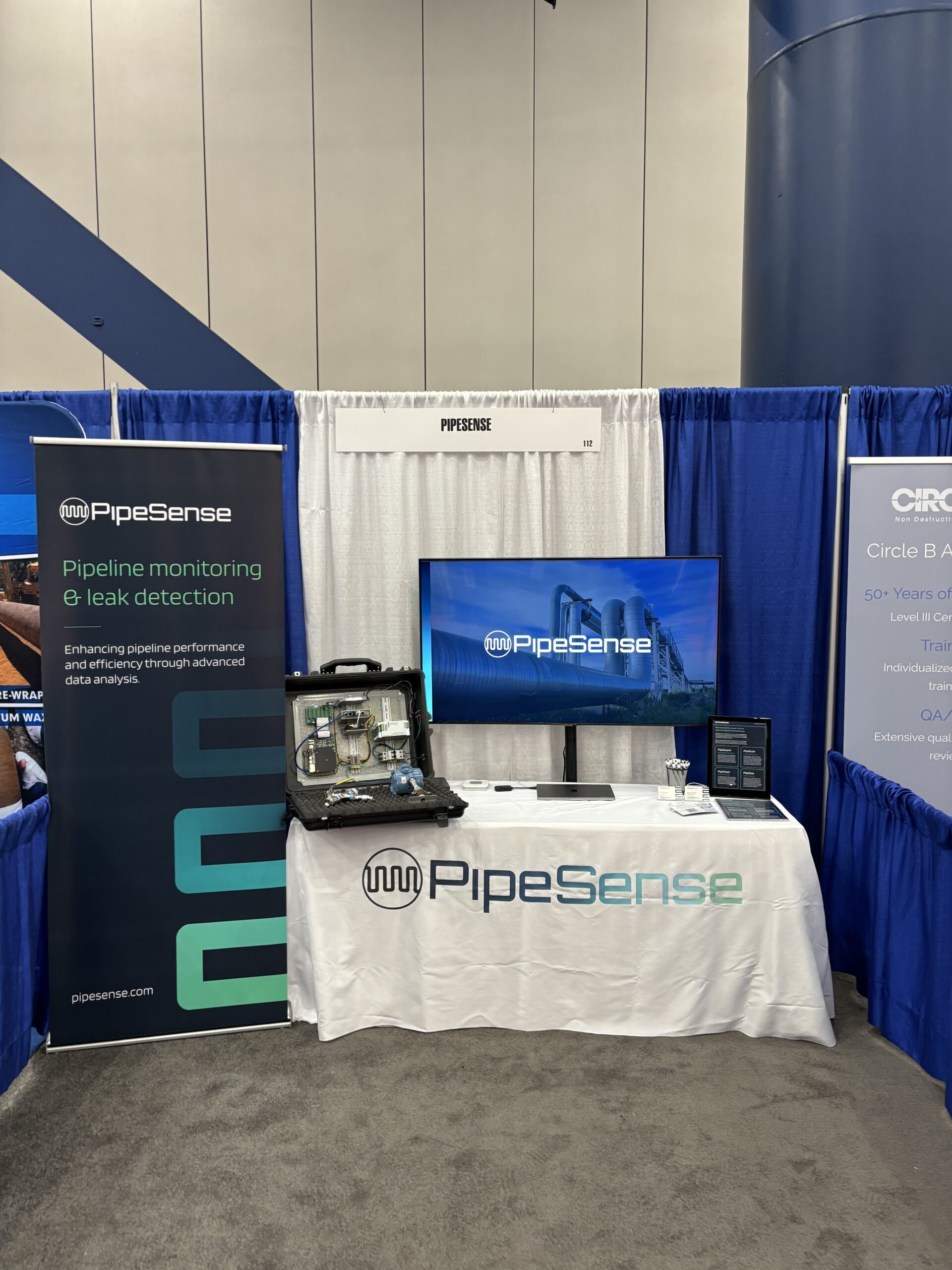
Getting in front of the industry is key to introducing the future of pipeline monitoring—and that’s exactly what PipeSense did at PPIM 2024 in Houston.

Hosted at the George R. Brown Convention Center, this year’s Pipeline Pigging & Integrity Management Conference brought together decision-makers, engineers, and innovators from across the global pipeline community. For the PipeSense team, it was a packed three days of valuable conversations, insightful sessions, and a standout opportunity to showcase our AI-powered pipeline monitoring and leak detection solutions.

We were proud to be nominated as a finalist for the PPIM 2024 Innovation Award, a major milestone so early in our journey. The nomination affirms our commitment to developing intelligent, real-time technologies that help pipeline operators detect, localize, and address leaks with unmatched accuracy and speed—minimizing risk to people, the environment, and operations.

But more than that, PPIM gave us a platform to share the PipeSense mission: to provide smarter, safer, and more scalable solutions for pipeline integrity management, both onshore and offshore.

And we’re not slowing down.

Next month, we’re heading west to keep the momentum going at Roseland Oil and Gas Marketing & Consulting’s WTX 2024 Convention, taking place March 27–28. If you missed us in Houston, this is your chance to connect, learn more about our technology, and see how PipeSense is raising the bar in pipeline reliability and operational efficiency.

AI-Backed Pipeline Technology Firm PipeSense Launches with Support from Charps and Sonomatic

AI-Backed Pipeline Technology Firm PipeSense Launches with Strategic Industry Support

A new era in pipeline integrity has officially begun. Backed by strategic investments from industry leaders Charps LLC and Sonomatic Limited, PipeSense has launched as an advanced technology company focused on revolutionizing pipeline monitoring and leak detection. Headquartered in Houston and built on over 100 years of collective industry experience, PipeSense combines cutting-edge artificial intelligence (AI), cloud-based software, and advanced hardware to offer operators a smarter, safer, and more efficient approach to pipeline integrity management.

Powered by AI, Fueled by Experience

PipeSense was formed following the acquisition of next-generation leak detection technologies from ProFlex Technologies. Designed to tackle the industry’s toughest operational challenges, the PipeSense platform uses AI-based data analysis to identify leaks, blockages, and pressure anomalies—delivering precise insights in real time.

From hydrotest leak location and pig tracking to pre-existing leak detection and blockage identification, PipeSense’s intelligent system goes beyond traditional inspection methods, offering actionable data and peace of mind to pipeline operators across both onshore and offshore environments.

Backed by Two Industry Leaders

The company’s foundation is strengthened by its two strategic investors:

  • Charps, a U.S.-based pipeline construction and maintenance contractor, is contributing to PipeSense’s management and R&D, as well as deploying its technologies in active projects such as hydrotest monitoring.

  • Sonomatic, a global leader in non-destructive testing and inspection, is supporting hardware development and software engineering while helping drive long-term innovation through direct business collaboration.

Together, Charps and Sonomatic provide the financial strength, industry expertise, and market access needed for PipeSense to accelerate growth during its first full year of operation.

Leadership with Vision

The leadership team behind PipeSense is equally impressive:

This powerful leadership team is committed to shaping PipeSense into a transformative force in the pipeline integrity space.

What’s Next for PipeSense?

The launch marks just the beginning. PipeSense is already building upon its proven technologies, with continuous investment into next-generation AI tools and scalable cloud infrastructure. By prioritizing safety, operational efficiency, and predictive insights, the company is poised to redefine how pipeline operators manage their most critical assets.

“This investment is monumental for PipeSense and will provide us the springboard to make an impact across the industry,” said Scott Bauer, VP of Operations. “We’re ready to lead the next chapter in pipeline integrity management.”

PipeSense Named Finalist for PPIM 2024 Innovation Award for Breakthrough Leak Detection Technology

We’re proud to announce that PipeSense has been selected as a finalist for the 2024 PPIM Innovation Award at the Pipeline Pigging & Integrity Management Conference in Houston, Texas—one of the most respected events in the pipeline integrity industry.

This recognition marks a monumental achievement early in our journey, affirming our mission to redefine pipeline safety and environmental protection through data-driven intelligence. It’s not just an award nomination—it’s validation from the industry’s most trusted voices that real innovation is happening here.

Why PipeSense Technology Stands Out

PipeSense is advancing the pipeline integrity space by leveraging NextAI-backed machine learning algorithms to provide real-time leak detection and operational insights. Our technology is built to minimize risk and maximize uptime—delivering measurable impact across the pipeline lifecycle.

By pairing intelligent data analysis with simple operator workflows, PipeSense empowers pipeline operators to detect leaks early, act faster, and avoid costly downtime or environmental damage. This approach transforms pipeline monitoring from reactive to proactive.

Built for the Field. Designed for the Future.

What sets PipeSense apart is not just what we do—but how we do it. Our leak detection system is:

  • AI-Driven for unmatched detection accuracy

  • Field-Tested and proven in challenging environments

  • Operator-Friendly, integrating seamlessly into existing infrastructure

  • Environmentally Responsible, helping companies meet ESG goals

This technology is a leap forward—not a bolt-on patch to legacy systems.

Looking Ahead

Being named a PPIM 2024 finalist fuels our momentum as we continue to bring next-generation pipeline integrity solutions to operators across North America and beyond. We’re grateful for the recognition, excited for the road ahead, and more committed than ever to advancing pipeline safety through innovation.

Our culture of innovation: Transforming pain into peace of mind

At PipeSense, innovation isn’t an idea. It’s how we get things done. We solve real problems because the status quo in pipeline integrity isn’t just outdated — it’s unreliable. And when the goal is protecting communities and the environment, “good enough” is nowhere near good enough.

Every new product or feature we develop, from permanent pipeline leak detection systems to real-time hydrotest dashboards, were built in response to a very clear and recurring client pain point. Why? Because our ultimate goal is not to sell. It’s to solve.

Blog: Why legacy pipeline leak detection systems are failing operators >

A company founded to reimagine pipeline integrity

PipeSense was built by people who saw the cracks in conventional systems and believed in a better way forward. We looked around and saw a market full of leak detection systems that required constant recalibration, oversight and explanation. So, we put together a team of field-savvy engineers, data scientists and hands-on problem solvers who’d spent time in operators’ boots and started creating better pipeline integrity solutions.

Read our origin story >

That mindset still defines how we work. We don’t have a siloed R&D department. Innovation is built into every part of our workflow. Ideas surface during test loop runs, creative whiteboard sessions or operator asks. What matters isn’t where they come from, but how quickly we act on them. Everyone on the team, whether they’re tuning algorithms in the office or running a hydrotest in the field, shares the same mission: deliver clarity, accuracy and speed to the people who need it most. Around here, anyone can drive the next breakthrough. And everyone does.

Explore our approach >

Humility + Curiosity = Progress. It’s Common Sense

What powers innovation at PipeSense isn’t just skill, speed or previous industry knowledge — it’s the way our team shows up for each other and our clients each day. We prioritize clarity over complexity, outcomes over ego and real-world performance over theoretical potential. In day-to-day life at PipeSense, that translates into constantly asking hard questions, pushing each other to improve and staying grounded to the operator’s point of view. No one’s too important to put on a hard hat and boots. And nobody gets too attached to their idea to scrap it if a better one comes along.

At PipeSense, feedback is fuel. When something doesn’t meet the bar, we don’t defend it. We dig in, rethink it, and make it better. That culture of openness, rigor, and respect is what allows us to move quickly without cutting corners. It’s how we’ve turned everyday pipeline frustrations into smarter pipeline monitoring and built a leak detection system that’s ready for whatever the field throws at it.

Explore PipeSense Certified Integrity >

Our innovation cycle: The Process

We don’t believe in “one-and-done” development. Innovation here is continuous, iterative, and always grounded in field reality. Every advancement — from pinpoint leak detection to smarter hydrotest dashboards — follows the same core process: start with what operators are actually experiencing, test against real conditions, refine based on results and repeat as changes emerge.

1. Listen: Tune into where frustration lives

We invest time speaking with and empathizing with operators, field crews and project managers to understand what’s getting in their way and what’s not working with current leak detection systems. Then, we treat these comments as field-level diagnostics. Listening grounds our work in the realities of pipeline monitoring and ensures every solution is built to address real, recurring issues with leakage in pipelines and pipeline integrity.

2. Create and test: Build it as you break it

Once we’ve identified a problem that needs solving, we don’t sit on it. Our team maps out use cases, sketches solutions, and quickly moves into building and testing physical prototypes.

Testing happens at our full-scale facilities in Katy, Texas, and Clearbrook, Minnesota, where we simulate the conditions pipelines face every day: shifting temperatures, pressure surges, long distances and limited communication infrastructure. We simulate leaks, measure response time, stress-test sensor accuracy and evaluate how well our AI models can cut through the noise to isolate real events. This isn’t lab-bench tinkering. It’s high-pressure, real-data, edge-case testing with the same conditions operators face in the field.

3. Improve: No pride, just progress

If something isn’t working, we fix it — fast. Every test exposes opportunities to make our pipeline leak detection system better, whether that means refining how we interpret pressure reflections, improving how dashboards present time-critical data or optimizing algorithms to better handle signal noise in complex environments. We’re constantly working to boost accuracy, streamline usability and expedite the path to pipeline integrity.

This phase is about getting the current solution right. We fine-tune until it performs in real conditions, then deploy with confidence. But even after launch, we incorporate operator feedback, review system logs and update features to reflect what’s going on in the field. Our AI models evolve with every leak event, and our interfaces grow more intuitive with every round of operator input.

Blog: Hands off, always on: PipeGuard’s autonomous leak monitoring technology >

4. Repeat: Get right back into the field

We never ship and forget. As pipelines change, regulations shift and new challenges emerge, we go back to the beginning: listen, test, improve. It’s how we went from temperature-corrected pressure trending to obstruction locating via pressure reflections. It’s why we realized the need for smarter pigs to detect pre-existing leaks in pipelines. And it’s how we’ll continue to solve tomorrow’s problems before they start to wreak havoc on operators’ peace of mind or pipeline integrity.

Our innovation cycle: The outcomes

Here’s how we turned frontline frustration into operator-first pipeline monitoring, pipeline leak detection and pipeline integrity tools that restore confidence, reduce downtime and give operators their personal lives back.

PipeTest: Hydrotesting without headaches

What we heard:

“Hydrotests take too long, and we’re flying blind on pressure behavior. I just want to know if we passed.”

How we solved it:

We knew the root issue wasn’t the test — it was visibility. Operators had the data but no way to see it clearly or interpret it in real-time. We designed PipeTest to track pressure and temperature at ultra-high frequency, automatically correct for thermal variation and instantly flag results during the test, not after. To further improve pipeline monitoring transparency, we built custom dashboards to provide operators with live pipeline integrity data that’s easy to understand and act on.

Explore PipeTest >

PipeGuard: Autonomous pipe leak detection that actually works

What we heard:

“We’re tired of chasing false positives. And it shouldn’t take days to confirm a leak.”

How we solved it:

False alarms were eroding belief in leak detection systems altogether. So we trained our AI not just to detect pressure anomalies, but to distinguish true pipeline leak detection events from operational noise. We collected and labeled tens of thousands of real-world pressure events (surges, line packs, pump startups and actual leaks), then trained PipeGuard to know the difference. Next, we field-tested our permanent pipeline leak detection system relentlessly to dial in sensitivity and achieve 99.99% leak detection accuracy.

Learn How PipeGuard Detects Real Leaks, Not Noise >

PipeScan: Internal pig-based leak detection for hard-to-detect leaks

What we heard:

“We’re running ILI tools, but pinhole leaks still get through. We need something more sensitive.”

How we solved it:

We realized the sensitivity gap wasn’t a hardware problem, but a signal issue. Standard ILI tools weren’t picking up the pressure cues left by micro-leaks. So, we developed internal sensing technology that samples pressure at extremely high frequencies during the pig run. We built early prototypes, ran them through test loops with simulated pinhole leaks and studied how the signal differed from normal flow. From there, we refined our pipeline leak detection models to amplify those subtleties, turning faint anomalies into clear, actionable results.

See How PipeScan Detects Pinhole Leaks with AI >

We innovate so operators can thrive

PipeSense builds smarter systems so operators can get back to what matters most. Like planning the next job instead of chasing ghost leaks. Closing out a hydrotest with confidence instead of waiting for someone to crunch the numbers. Or finally getting a full night’s sleep without wondering if a minor alarm will turn into a major problem.

What can you accomplish with the power of PipeSense’s culture of innovation behind you?

Find out >

Pass the pressure test: How AI accurately detects leaks from ultra-high frequency pressure sampling

PipeSense pipeline leak detection flags leaks within minutes, avoids false positives and pinpoints the source with location accuracy within 50 feet. It delivers certainty in situations where most systems relay noise. It’s common sense in a world of nonsense.

To operators beaten down by decades of uncertainty, it can feel like magic.

In reality, it’s the result of a tightly integrated system of physics, signal processing and machine learning engineered from the ground up to catch the earliest physical signal of a leak: the pressure pulse. While legacy leak detection systems issue alerts only after they register a flow imbalance or volumetric shortfall, PipeSense responds at the exact millisecond the pipe breaches and a pressure wave radiates through the product column. Then, our pipeline integrity software confirms whether the signal is a real leak event or routine fluctuations in real-time. 

Here’s how it happens:

1. Capture the first clue (at 1,000 samples per second)

Every leak begins with a pressure event — a split-second wave that travels through the pipeline before any volume is lost and flow balance registers anything’s wrong. 

PipeSense captures that moment at 1,000 samples per second. These signals, known as negative pressure waves, radiate outward from the leak site, moving upstream and downstream through the product column. They’re short, sharp and consistent. A kind of sonic fingerprint that tells us exactly when and where a breach occurred.

It’s important to note, pressure pulses alone are not indicative of an actual leak event. Compressor kicks, valve closures and pump startups generate similar transients. The problem is that most legacy pipeline leak detection systems can’t tell the difference. They don’t sample fast enough or filter smart enough to separate signal from static. Our pipeline integrity software flips the script. 

How legacy leak detection systems are failing operators > 

2. Timestamp and sync across the line

Pressure pulses from actual leak event don’t happen in just one place — its signature reverberates across the line. So, interpreting that signal and moving forward with confidence requires more than pressure data. You need timing.

Every PipeSense field processing unit (FPU) is GPS-synchronized. While each unit operates independently, sampling pressure locally at 1,000 kHz, they all share a common timing (accurate to the millisecond). What does this mean? Every pressure anomaly, no matter where it occurs, is recorded with a precise timestamp that’s consistent across the network.

Why does this matter? Because pressure pulses travel at a known velocity through the product medium, confirmed during system commissioning. When a leak occurs, the pulse propagates upstream and downstream at that speed. By comparing exactly when that wave reached each sensor, PipeSense pipeline integrity software can pinpoint the origin. 

No fiber links. No peer-to-peer communications. Just physics, timing, and GPS accuracy. The result: leak location within 50 feet, without relying on flow models, SCADA alignment, or central controllers. Something legacy pipeline leak detection systems could never. 

3. Isolate the event in real-time

Pressure spikes happen all the time in pipeline operations. Some matter. Most don’t. PipeSense was built to know the difference, and that judgment starts at the edge.

As soon as a pressure pulse crosses a detection threshold, the FPU immediately stores a high-resolution snapshot: one minute of data before the event, and one minute after. This creates a contextual window — not just a blip, but a full pressure timeline surrounding the anomaly. During this process, the FPU performs real-time signal filtering. It sharpens the edges of the pressure trace, reduces background chatter and flags events based on shape, duration, and deviation from local baseline behavior. It’s not calling anything a leak yet, but it’s preparing the dataset for deeper analysis.

This edge-based triage is critical. Legacy pipeline leak detection systems often rely on basic  thresholds or rely on SCADA rules written for ideal conditions, resulting in either constant false positives or total desensitization. Our pipeline integrity software avoids both. To put it simply, it doesn’t fire on noise. It curates real signals for real evaluation.

4. Convert pressure into frequency

Pressure over time tells one part of the story. Frequency reveals the rest.

Once the event data package is transmitted to the central server (either on the client’s infrastructure or securely hosted by PipeSense) the event is transformed from the time domain into the frequency domain. This conversion generates a 3D frequency plot: a visual and analytical map of time, amplitude, and spectral energy.

What emerges is a pressure “fingerprint.” Leak events always show up with the same distinct features. Whether the line is carrying gas or liquid, whether the diameter is 6-inch or 36-inch, this frequency shape remains consistent.

In contrast, non-leak pressure events like valve chatter, compressor surges, and pump cycling appear different. To AI, the difference is unmistakable. Legacy pipeline leak detection systems never make it this far. They stop at thresholds. PipeSense keeps going — straight into the frequency spectrum where leaks reveal themselves.

5. Match the signature to a verified database

This is where interpretation becomes confirmation. Every frequency plot generated by PipeSense’s leak detection system is compared to a proprietary database of more than 35,000 verified pressure events — a catalog built from years of field data, simulated leak releases and operational anomalies. Each signature is tagged as either a leak or a known non-leak, based on real-world outcomes.

The AI at the core of our pipeline integrity software analyzes each event’s spectral shape, intensity, rise/fall characteristics, and duration. It then searches for a match in the library and ranks its confidence. If the signature aligns with a verified pipeline leak detection pattern and meets the confidence threshold, it’s confirmed. If not, it’s discarded.

This purpose-built AI model is specifically trained for pipeline pressure events. And unlike off-the-shelf AI, this model doesn’t drift. It’s continuously refined by PipeSense engineers who review edge cases, validate system decisions, and ensure that “smart” stays smart. 

6. Issue a pinpoint alert in real-time

Once a leak is confirmed, PipeSense’s pipeline leak detection system moves fast.

An alert is issued instantly — complete with timestamp and GPS coordinates. The control room dashboard updates in real-time, showing the exact segment and location where the event occurred. Operators see the when, the where, and the what all at once.

There’s no decoding required. No cross-referencing with SCADA. No wondering if it’s a nuisance alert or something worth shutting down for. Because PipeSense doesn’t raise the flag unless the system is sure.

That level of clarity matters. It means dispatching crews with purpose, not on hunches. It means planning repairs before product loss snowballs. It means staying online until you have a reason to act — and then acting with confidence. In high-consequence environments, that kind of certainty is what defines truly effective pipeline leak detection.

Pressure pulse analysis and AI: Why it matters

By anchoring detection to the earliest physical event, the pressure pulse, PipeSense delivers clarity within minutes, not hours. It doesn’t wait for volume loss. It doesn’t require flow model adjustments. It doesn’t trigger at the threshold of disaster. It works upstream of the problem — physically and operationally.

Faster response, less loss

The earlier your pipeline leak detection system identifies a leak, the more you can save — in product, cleanup, downtime, and regulatory exposure. PipeSense cuts response time from hours to minutes, reducing the size and cost of an incident before it spreads.

Pinpoint location = no wild goose chases

When PipeSense issues an alert, it includes GPS coordinates within 50 feet of accuracy. That eliminates the “needle in a haystack” problem. No wasted hours walking the line. No exploratory digs. Just actionable intel from a smarter leak detection system.

Zero false positives = zero wasted effort

Every alert is real. That means no unnecessary shutdowns, no truck rolls for non-events, and no eroded confidence in your pipeline integrity software. Field teams know when to move and when to stay focused on scheduled work.

Proven clarity = audit confidence

Each confirmed leak is logged with a high-fidelity data record, complete with a timestamp/GPS coordinates. It’s not just leak detection — it’s forensic-grade documentation, ready for regulators or internal review.

One system, many use cases

The same AI, pressure sampling, and physics engine that powers pipeline leak detection also enables blockage detection, hydrotest monitoring and pre-existing leak validation. It’s not a niche tool. It’s a platform for modern pipeline integrity.

It’s not magic. It’s physics, engineering and a lot of math.

PipeSense doesn’t trade in black box promises. What makes the system work isn’t hidden. It’s built on transparent, proven methods: high-frequency sampling, GPS-synced time series data, spectral analysis and machine learning trained on real-world results.

That’s the real pressure test — and PipeSense passes it every time.

Choose common sense >

Why legacy pipeline leak detection systems are failing operators

For years, legacy pipeline leak detection CPM systems have skated by on the idea that “good enough” detection was, well, good enough. But today’s pipelines demand more. They span high consequence areas (HCA’s) — deserts, cities and waterways — environments where pressure fluctuates by the second and where the margin for error is razor-thin.

Yet across the industry, operators are still relying on legacy pipeline leak detection systems that were never designed to keep up with today’s infrastructure complexity, environmental risk or operational pace. These outdated systems depend on manual interpretation, cumbersome hydraulic modeling and delayed volumetric calculations that force operators into a dangerous waiting game.

And the truth is, it’s a game they’re losing. Let’s break down why legacy pipe leak detection systems are failing operators and how pressure-based, real-time, fully autonomous systems like PipeSense’s PipeGuard are rewriting the rules.

1. They rely on loss, not on leak behavior

Traditional pipeline leak detection systems don’t actually “detect” leaks: they infer them. Mass balance and volume balance systems look at flow discrepancies — comparing input and output over a period of time — to estimate loss. This means your system has to lose enough product to raise a red flag.

In most liquid lines, that threshold isn’t triggered until several barrels have already disappeared. In gas pipelines, where compressibility and thermal expansion further complicate things, leaks may go undetected altogether. Especially the small, insidious ones that slowly add up to big problems. If the system’s response time is tied to product loss, that means detection is reactive by design. You’re not catching leaks as they happen. You’re responding after the fact and hoping you find it before someone else does.

2. They’re slow. Glacially slow.

Legacy CPM systems often take hours, sometimes days — to detect a leak. That’s not an exaggeration. It’s baked into the model. You need enough cumulative loss to breach the detection threshold, and that takes time.

In the best-case scenario, that means waiting through multiple pipeline cycles before an alarm is even triggered. By then, the leak has had time to spread, migrate and potentially compromise surrounding infrastructure or ecosystems.

Operators trying to use these systems proactively end up guessing. And when your leak detection relies on guesswork, it’s no longer a detection system — it’s a liability.

3. They depend on operators for interpretation

Legacy systems lean on operators to do their jobs for them. Mass balance systems demand constant attention: hydraulic modeling, transient flow adjustments, threshold tuning, sensor alignment, flow reconstructions and a whole lot of guesswork. The systems themselves aren’t making decisions. They’re tossing raw numbers and hoping a seasoned operator is there to sort signal from noise.

Even basic operational changes — like a pump coming online, a control valve cycling, or a compressor adjusting — can throw off calculations or mimic a leak event. And unless you’ve got someone on shift who knows how to read those fluctuations in context, and correct for them on the fly, you’re flying blind.

One small misinterpretation in a complex hydraulic model could either mask an actual leak or lead to a false response that sends your team on a wild goose chase.

4. They miss the small stuff

Legacy systems weren’t designed to see pinhole leaks or slow weeps. Their sensitivity caps out somewhere between “medium” and “catastrophic.” Why? Because increasing sensitivity in volume-based systems often leads to a spike in false alarms.

That’s the tradeoff: turn the sensitivity up and flood your control room with false positives. Turn it down, and leaks slip through undetected. Most operators choose the latter. The result? A system that doesn’t trip unless the leak is significant.

This is especially dangerous in pipelines carrying high-pressure gas, where even a small leak can pose massive safety, environmental, and regulatory risk. But the system doesn’t care. It’s not looking for pressure transients — it’s watching your flow meters and waiting for the math to come up short.

Explore the real cost of false positives

4. Their accuracy is consistently… inconsistent

According to a federally funded PLCI study, legacy mass balance systems reported a 1.47% false positive rate. Doesn’t sound too bad, right? — until you realize that on a busy pipeline, that translates to dozens (or hundreds) of false alarms per year.

Each one requires a manual response: dispatch crews, investigate the site, determine the cause, reset the alarm. Multiply that across a network, and you’re looking at thousands of wasted man-hours annually — not to mention eroded trust in the system itself.

What’s worse, these systems can’t distinguish between a real leak and other common pipeline behaviors. Fast-closing valves. Faulty instrumentation. Equipment frequency interference. All of these can trigger leak alarms, and none of them actually mean you’ve got a breach.

The result? Operator fatigue. And when people stop trusting the alerts, real leaks start getting missed.

The real price of peace of mind

5. They require constant recalibration

Legacy systems aren’t just slow — they’re needy. These setups demand a level of maintenance that borders on obsessive: constant recalibration, regular drift checks, manual tuning for flow and temperature variations, and custom threshold settings that have to be babysat every time the pipeline configuration changes.

Change your pump profile? Recalibrate. Adjust throughput? Recalibrate. Seasonal temperature shifts? Recalibrate.

And this isn’t a once-a-year tune-up. We’re talking about ongoing tweaks just to keep the system functional, let alone accurate. Operators are stuck in a never-ending loop of adjustments: aligning sensors, correcting for noise, recalculating expected volumes and filtering out false readings triggered by things like valve closures or compressor kicks. It’s like flying a plane with autopilot where the autopilot needs hourly tuning.

6. They break when the environment gets tough

Legacy pipeline leak detection systems were designed for pipelines running through high-infrastructure zones with stable communications, consistent power and easy access. The real world? Not so tidy.

Pipelines run through waterways, frozen tundra, dense jungle, arid desert, and remote mountaintops. Try setting up a hardwire, recalibration-heavy leak detection system in any of those environments and you’ll be fighting a losing battle. Whether it’s because you can’t get reliable comms or the power source is unstable, legacy pipeline leak detection tech just wasn’t built to survive where pipelines actually live.

7. They call for add-ons to function properly

Perhaps the most telling sign that legacy systems are failing? The workarounds. The patchwork. The add-ons and “upgrades” meant to prop up aging infrastructure.

You’ll see it in the form of redundant fiber lines, external acoustic sensors, third-party pig tracking systems and even aerial drones trying to fill in the detection gap. These bolt-ons are a symptom of a deeper issue: the core system wasn’t designed for modern pipelines. And instead of fixing the root cause, operators are forced to stitch together stopgaps to keep things limping along.

It’s a patchwork strategy with a premium price tag — and a shelf life. At some point, no amount of duct tape can hold together a system built on 40-year-old assumptions.

Modern leak detection doesn’t need babysitting, bolting-on or bulked-up analytics teams. It needs accuracy, autonomy and the ability to prove its value the moment something goes wrong.

Enter: Autonomous leak detection systems

Legacy leak detection systems rely on loss. Autonomous monitoring relies on behavior. And the shift away from volume-based guesswork and toward pressure-based confirmation marks one of the most significant leaps in pipeline integrity management to date.

At the heart of modern autonomous systems is high-frequency pressure sensing, which captures pipeline behavior in real time, not just after a loss is tallied. These systems monitor for negative pressure waves (NPWs): brief, high-speed pressure disturbances generated at the moment a leak begins. Because these events occur almost instantaneously, autonomous systems can detect leaks within seconds instead of hours.

PipeGuard, PipeSense’s permanent leak detection solution, samples pressure at 1,000 kHz (1,000 times per second) capturing transient signals that older technologies would miss entirely. Each detected anomaly is timestamped with GPS accuracy, allowing operators to pinpoint the event location within a 20–50-foot window. It’s not “close enough” monitoring, its precision backed by physics.

Meet PipeGuard

Pattern recognition that gets it right

Every anomaly goes through an AI-backed post-processing engine. It doesn’t just scan for “something weird.” It classifies what that weird thing actually is — based on frequency, intensity, and duration. The database includes everything from actual leaks (under different conditions and flow rates) to completely normal pipeline events like control valve actuation, vibration noise, and instrumentation glitches.

The system matches the pressure pulse to its closest known signature, scores the confidence, and either confirms it as a verified leak or throws it out as harmless. That’s what gives operators real clarity. It’s not “maybe something happened.” It’s “yes, something happened, and here’s where, when and why.”

Because the system also logs the pre- and post-event data, operators get the full context of every event — not just a blip on a dashboard. With autonomous monitoring systems like PipeGuard, you’re not reacting to noise. You’re responding to a known issue, backed by high-fidelity data that’s been reviewed and confirmed before you even see it.

Explore our hands-off, always-on technology

Self-calibrating by design: No tuning. No babysitting.

Legacy systems need constant coddling. Change the product, tweak the flow rate, or experience a temperature swing, and suddenly you’re recalibrating for hours. But autonomous monitoring doesn’t just adapt, it self-adapts. Modern pressure-based systems calibrate themselves on Day One. By capturing baseline pressure behavior during normal operations and test events (including simulated leak releases during commissioning), the system learns your pipeline’s personality. It maps normal fluctuations, expected valve activity, even flow noise and uses that foundation to filter out anything that doesn’t belong.

The result? No drift. No sensitivity drop. No technician with a laptop crouched in the mud trying to tweak signal thresholds. Autonomous systems evolve as your pipeline conditions do without interrupting flow or calling for manual intervention.

How PipeGuard self-calibrates

Installation without interruption

Legacy CPM systems often come with a long to-do list: engineering reviews, days of prep, tie-in permits, SCADA reconfigurations and in some cases — planned shutdowns just to bring the system online. The entire process can stretch into weeks, draining time, resources and patience.

Autonomous pressure-based systems like PipeGuard flip the script. Installation is modular, fast, and designed to work within your existing infrastructure. Sensors are mounted directly to standard ½” to 2″ quarter-turn ball valves — no welding, no hot taps, no pipe modifications and no need to depressurize the line. One field crew can install and commission multiple Field Processing Units (FPUs) in a single day, often covering long pipeline stretches without requiring specialized equipment or extended site access.

Once installed, FPUs begin collecting high-resolution pressure data almost immediately. Each unit is pre-calibrated, GPS-synced and built to start streaming usable data within minutes.

Designed for the pipeline, not the control room

One of the biggest shifts in modern leak detection is that pressure-based systems are built for the same environments pipelines operate in and not just the comfort of a climate-controlled control room. These systems aren’t fragile, centralized setups that break down when infrastructure gets sketchy. They’re designed to be deployed across deserts, mountaintops and waterways — anywhere you’ve got pipe and pressure.

Each unit operates independently, without the need for sensor-to-sensor communication or a constant link to a central processor. Power flexibility is built-in: they can run on standard mains or go fully autonomous with solar-plus-battery configurations. Connectivity is just as adaptable. In networked areas, LTE provides seamless data transmission. In remote locations, satellite options like Starlink keep the data flowing.

It’s rugged, resilient and ready to operate wherever the pipeline goes, without skipping a beat.

Autonomous systems aren’t shackled to control rooms or limited to wired-in infrastructure. They’re designed to go where the pipe goes. That means deserts, tundra, offshore risers and other places where traditional CPM systems struggle just to stay online.

Every alert, audit-ready

When a leak happens, you don’t just get a notification. You receive a complete digital fingerprint of the event. Autonomous monitoring automatically captures a minute of pre-event and a minute of post-event high-resolution pressure data (sampled at 1,000 times per second), giving operators a clear before-and-after picture of what actually occurred in the line. Each event is geotagged with GPS coordinates accurate to within 20–50 feet and time-stamped using satellite-synchronized clocks to ensure traceable accuracy.

Need to show proof of performance? Satisfy a regulator? De-risk compliance reporting? Autonomous monitoring systems like PipeGuard gives you a crystal-clear, time-stamped paper trail — no spreadsheets, no SCADA digging and no interpretation required. It’s real-time transparency, baked in.

A final thought: Why it matters

Legacy systems were built for a different time — a time when pipelines were shorter, response expectations were slower, and nobody expected leak alerts to come with forensic-grade proof. That era’s over. Today, operators are managing sprawling infrastructure under tighter regulations, greater environmental scrutiny and with far less room for error.

What’s needed now isn’t another flowchart or delayed alarm. It’s a system that gives fast, accurate, and verifiable insight without waiting for volume loss, without false alarms and without a Ph.D. in hydraulic modeling to understand what’s going on. That’s what real-time, pressure-based, AI-validated leak detection brings to the table. Not as a concept. As a working reality — already deployed, detecting and proving its worth.

Because in this industry, “good enough” leak detection isn’t good enough anymore.

PipeGuard: It’s common sense

Designed to be operator-proof, not operator-dependent, PipeGuard functions autonomously in real-world environments without needing fiber, flow models or forensic deep dives to be effective. With a whole new level of operational transparency, agency and free time, operators can prioritize innovation, growth and stress-free family with friends and family instead of wasting resources on leaks that don’t exist. Or worrying about missing the leaks that do.

Experience total peace of mind

The Backbone of Tomorrow: Charps and the Vitality of American Infrastructure on All Access with Andy Garcia

Viewers can discover the unseen efforts and cutting-edge technologies ensuring the
reliability of America’s essential energy infrastructure in an upcoming segment of “All
Access with Andy Garcia” featuring the dedicated professionals at Charps.
Consumers can go behind the scenes with “All Access with Andy Garcia” to witness the
critical work performed daily by the tradesmen and women of Charps. Set to film later
this year, this insightful segment will explore how their specialized skills and unwavering
commitment maintain and upgrade the nation’s vital oil and gas pipelines. Viewers will
also gain a fascinating look at PipeSense, innovative AI-powered technology that
provides round-the-clock monitoring, acting as an intelligent guardian to safeguard both
communities and the environment. This story highlights the dedication and ingenuity
powering the infrastructure that underpins our daily lives.

“Maintaining America’s energy infrastructure is about more than keeping the lights on — it’s about shaping a safer, smarter future,” said Joe Van Vynckt, CEO of Charps. “By merging our field-proven expertise with real-time AI technology like PipeSense, we’re not only responding to today’s challenges but anticipating tomorrow’s needs.”

The demand for energy in America continues its upward trajectory, placing
unprecedented pressure on an aging infrastructure network, some of which has served
the nation for over half a century. Addressing this challenge requires not only a
dedicated and highly trained workforce but also the integration of forward-thinking
technological solutions. Charps embodies this comprehensive commitment, providing a
skilled team of tradespeople equipped to tackle the unique and often complex demands
of pipeline maintenance and critical upgrades, frequently operating in challenging and
remote terrains. Complementing their essential boots-on-the-ground expertise is
PipeSense, a cutting-edge AI system that continuously analyzes a wealth of pipeline
condition data, capable of detecting even minute anomalies in real-time. This powerful
fusion of invaluable human skill and sophisticated artificial intelligence represents a
significant leap forward in proactively ensuring the enhanced safety, long-term
efficiency, and overall reliability of our nation’s vital energy transportation network,
ultimately playing a crucial role in protecting the diverse communities through which
these essential arteries run. This upcoming segment aims to significantly broaden public
understanding of the immense and often unseen effort, alongside the remarkable
technological innovation, that is fundamentally involved in the continuous process of
keeping America reliably powered and its environment safeguarded for generations to
come.

About All Access with Andy Garcia: All Access with Andy Garcia is a Public
Television program that takes viewers on a journey to explore the inner workings of
dynamic companies and their contributions to various sectors. Hosted by the acclaimed
actor Andy Garcia, the program aims to educate and inspire audiences by showcasing
the dedication and innovation driving American businesses.

Learn more at: www.allaccessptv.com

About Charps LLC: Charps LLC is a leading provider of specialized services for the
maintenance, integrity, and upgrade of critical infrastructure, including oil and gas
pipelines. With a dedicated team of skilled tradespeople and a commitment to
innovation, Charps ensures the reliability and safety of these essential assets. Their
family of companies includes NorMinn Industrial, TVT, and PipeSense, a developer of
cutting-edge AI-powered pipeline monitoring technology.

Learn more at: www.charps.com

The real cost of false positives (and how to eliminate them from your pipeline leak detection strategy)

False positives are the definition of nonsense. They waste time, drain resources, damage trust and leave operators on a treadmill of reactivity. From compromised productivity to reputational risk, false positives burden operators not just financially — but emotionally, mentally and strategically. They hijack focus, slow innovation and normalize reactive operations. And the worst part? The industry continues to treat them as an unavoidable cost of doing business.

They’re not. False positives are entirely preventable; a systemic failure rooted in outdated tools that rely on indirect measurement, volume loss and generalized thresholds. Our pipeline leak detection technology replaces this reactive, rinse-and-repeat cycle with total clarity. Through AI, high-resolution pressure pulse data, real-time sampling (1,000 pressure points per second) and a proprietary library of verified leak and non-leak events, PipeGuard provides instant, data-backed insight into pipeline integrity.

When everything is on the line, why choose nonsense over common sense?

The tangible price tag of inaccuracy

When a leak alarm goes off, it triggers a cascade of costly actions: crew mobilization, operations review, communication protocols and possibly a full-blown shutdown — all before anyone even knows if the leak is real. A PHMSA-funded study found that legacy mass-balance systems generated a false alarm 1.47% of the time. That might not sound like much—until you’re operating a pipeline network that receives thousands of alerts each year. Scale it across a dozen assets, and you’re talking dollars spent investigating problems that don’t exist.

And the kicker? This is just the surface-level cost. Factor in vehicle wear, fuel costs, unnecessary use of safety equipment, and the opportunity cost of pulling teams away from scheduled maintenance and the real impact becomes painfully clear.

1.   Wasting resources dispatching crews for non-issues

Nonsense: Traditional pipeline leak detection

In most control rooms, the protocol is clear: a leak alert comes in, boots go out. That reaction is hardwired into standard operating procedures because the risk of ignoring a real leak is simply too high. But when your system cries wolf (again and again) those rapid responses start draining more than just diesel.

Crews are often deployed into remote or hard-to-access areas, sometimes spending hours or even days chasing down an event that wasn’t real to begin with. A single false positive can burn 16–48 hours from dispatch to conclusion, especially when the terrain is unforgiving, or access points are sparse. By the time the team wraps up their investigation, resets the system, and writes the report, that’s a full week’s worth of productivity gone — with nothing to show for it. Now multiply that by a dozen false positives a year, and you’re not just losing and money, you’re losing momentum.

Common sense: PipeGuard

Protecting your team’s time by only reacting to real threats. By detecting the difference between pressure noise and real leaks using a database of over 35,000 verified events, our pipeline monitoring software ensures operators allocate resources strategically — rather than sending teams on wild goose chases caused by routine pressure swings.

2.   Stalling productivity with unnecessary shutdowns

Nonsense: Traditional pipeline leak detection

Sometimes the most expensive consequence of a false positive isn’t a wasted truck roll — it’s an unnecessary shutdown. For operators managing high-consequence or regulated assets, even the possibility of a leak can trip alarms, trigger compliance protocols and bring the entire line to a grinding halt. It’s the “better safe than sorry” approach, and while it’s justified from a safety standpoint, it crushes throughput and productivity.

A single unplanned shutdown doesn’t just pause product flow — it sets off a chain reaction of downstream delays, missed delivery windows, and potential penalties from offtake agreements or service-level contracts. If you’re moving product for a refinery, utility or petrochemical plant, even a few hours of delay can have major financial and reputational consequences.

And shutdowns are only half the battle. Restarting is where things get really costly. Bringing a pipeline back online means rebalancing pressures across the network, re-priming pumps and valves, potentially purging or cleaning lines and ensuring pipeline integrity at every point before resuming operations. That takes time, labor and a whole lot of coordination — especially if you’re working across multiple control centers or remote terminals.

Common sense: PipeGuard

Monitoring 1,000 pressure samples per second and validating every pulse with built-in AI, PipeSense gives you immediate clarity. You’ll never shut down because of uncertainty—only for the real thing, and only when it matters. With our pipe leak detection technology, your pipeline will stay online, your team remains calm, and business keeps flowing.

3.   Engaging in a constant cycle of rework and retrofits

Nonsense: Traditional pipeline leak detection

When a pipeline leak detection system can’t be trusted, the natural reaction is to patch it. Tweak the thresholds. Add a sensor. Rewrite the logic. Anything to make it just a little less wrong.

We’ve seen so many times. Operators bolting on downstream flow meters just to cross-check alarms. Acoustic sensors wired in to pick up what pressure sensors missed. Custom SCADA rules built to suppress known nuisance triggers. Redundant software tools deployed in parallel because no one trusts the alerts coming from the primary system.

It’s a Frankenstein approach to pipeline integrity — one that’s never-ending. Each new workaround adds cost, complexity and risk. It clutters your architecture with layers of tech that weren’t designed to work together, increases your maintenance burden and introduces new points of failure. More sensors means more calibration. More software means more updates, licenses and security risks. And it’s all to compensate for the one thing your pipe leak detection system should be able to do on its own: accurately detect a leak.

Common sense: PipeGuard

Choosing pipeline leak detection software that’s fully autonomous. Our pipeline monitoring software installs directly into your existing valves and provides full coverage without needing extra flow meters, acoustic sensors or custom SCADA logic. No rework, no retrofits, no duct tape fixes. Just one streamlined system that does the job right the first time, and every time after that.


Keep learning about PipeGuard’s autonomous monitoring 


4.   Losing product because of unreliable detection

Nonsense:

When a pipeline leak detection system is riddled with false positives, the real danger isn’t just chasing ghosts — it’s missing what matters. Real leaks that go undetected (or are deprioritized due to alert fatigue) and cost operators hard dollars, fast. We’re talking about actual product lost, contractual fines and costly cleanup operations that cut straight into margins.

For liquid pipelines, even a minor undetected leak can mean thousands of gallons of lost product per day. For gas pipelines, the financial impact can escalate even faster.

There’s also the downstream impact. Missed leaks trigger unplanned shutdowns, delay deliveries and throw off system balance. This results in supply chain penalties, missed nominations or forced purchase agreements. For high-volume or regulated lines, those interruptions can snowball into millions in financial exposure before the root cause is ever found.

Common sense

Using pipeline monitoring software that leverages pressure pulse signatures validated by AI to catch both pinhole seeps and major ruptures in real-time. Our pipeline leak detection technology never drowns you in noise — so when it speaks up, you listen and act. Total precision and accuracy drastically reduce product loss and keep your margins predictable and strong.

5.   Inflating admin load for no reason

Nonsense: Traditional pipeline leak detection

There’s no such thing as a false positive that doesn’t leave a mark. Even if it turns out to be nothing, a flagged event often triggers reporting requirements — from internal logs to full-on incident documentation submitted to PHMSA or other local and federal regulators. Once the clock starts ticking, operators must show that they’ve investigated, responded, and mitigated even if the alert was wrong in the first place.

False positives often force teams into a formal sequence of event reviews, audit trail entries and detailed root cause analyses. If the line was paused — even briefly — there’s additional documentation. If stakeholders were notified? More forms, emails and explanations, all compounding into days of admin work that’s time-consuming and costly.

Worse still, repeated false alerts can create a history of non-events in your compliance file, raising eyebrows during audits and causing doubt among regulators. Over time, this undermines confidence in your system and can result in increased scrutiny, audit frequence or even mandated third-party validations.

Common sense: PipeGuard

Choosing a pipeline leak detection solution that ensures you’re always responding to actual leak events and keeps track of compliance needs automatically. Every pressure event is GPS-stamped, time-stamped and AI-verified the moment it happens, creating a complete digital audit trail that’s regulator-ready without the paperwork grind.

The hidden toll of false positives on operators, teams and communities

In control rooms across the industry, trust in leak detection systems is crumbling. And it’s not because operators don’t care — it’s because their systems keep getting it wrong. Every false positive forces them into a familiar, exhausting cycle: pause, assess, dispatch double-check, report. Then do it all over again tomorrow.

Each alert sets off a wave of mental gymnastics: Is it a leak? Is it the compressor? Is it just turbulence? Operators are left second-guessing every beep and blinking light, battling the tension between staying cautious and not overreacting. And the longer this continues, the harder it gets to act decisively.

We’ve heard it firsthand. Operators who say they dread the next alert — not because of the threat it signals, but because of the uncertainty it brings. One described the daily grind as a “slow erosion of confidence,” where even real leaks become harder to distinguish because their system has cried wolf too many times. Another shared how their team started logging alerts in a spreadsheet just to track how often they were wrong—because the system didn’t learn, so they had to. That’s not leak detection. That’s decision fatigue disguised as safety.

1.   Sacrificing peace of mind and quality of life

Nonsense: Traditional pipeline leak detection

For operators, a pipeline alert isn’t just a notification on a screen. It’s a weight. A what-if. A nagging sense that something might be wrong, even when everything seems fine. We’ve been in your boots: lying awake at night, wondering if the system caught that last pressure change. Waking up to another alert at 3 a.m. and debating whether to get dressed or trust that it’s just another false alarm. Always on edge. Always waiting for the other shoe to drop.

And when you’re off the clock? You’re not really off. That family camping trip gets cut short because the phone won’t stop buzzing. The fly rod stays in the truck because you’re too worried about what’s going on back at the terminal. Even when you try to relax, your mind stays in the control room — replaying recent alerts, double-checking decisions and bracing for the next ping. When your pipeline leak detection system can’t be trusted, you don’t just lose operational confidence; you lose the ability to fully live your life.

Common sense: PipeGuard

Implementing a pipeline monitoring software tool that ensures you can trust what you see and act without having to do any mental gymnastics—without hesitation. PipeGuard rebuilds the broken relationship between operators and pipe leak detection technology by removing guesswork and restoring confidence through real-time pressure pulse validation and AI-backed accuracy. You’ll be more present when you’re spending time with friends and family, and maybe even be able to catch a concert after the workday ends for once.

2.   Jeopardizing community trust and external relationships

Nonsense: Traditional pipeline leak detection

Pipeline leak detection isn’t just about protecting assets — it’s about protecting people. The pipelines you manage run through real communities. Past schools, under farms and alongside neighborhoods. The moment your monitoring system falters, it’s not just your operations that feel the shock. The people nearby feel it too.  A single false alarm can trigger unnecessary evacuations, disrupt traffic or make the evening news. A missed leak is even worse — drawing headlines, investigations and community outrage. Either way, public trust takes the hit. And once it’s gone, it’s a long road to earn it back.

Operators have told us about the pressure—the weight of knowing their system might not catch everything. The unease of wondering, “Is our community actually protected—or are we hoping the system does what it says it will?” That’s not operational peace of mind. That’s fear disguised as protocol.

From the community’s side, the reaction is just as visceral. Every false alert erodes credibility. Every misstep becomes a datapoint. And the moment your public assurance sounds more like a guess than a guarantee, you lose control of the narrative. Your pipeline is no longer seen as secure.

Common sense: PipeGuard

Protecting more than just the pipe — proactively safeguarding the life that surrounds your operations. With our pipeline monitoring software, not only will you catch leaks faster and rest assured you’re doing everything in your power to run your organization responsibility, you’ll pass along your peace of mind to your neighbors. PipeSense gives you the confidence to stand behind your system and the clarity to show communities you’ve got their back.

3.   Driving wedges between teams

Nonsense: Traditional pipeline leak detection

One false positive can set off a domino effect of doubt, finger-pointing and technical firefighting that ripples across your organization. Control room operators begin second-guessing every dashboard readout. Field crews stop trusting alerts. Engineers start patching holes that shouldn’t exist. And IT? They’re stuck combing through logs trying to figure out what actually happened — and whether the data can even be trusted.

When your data isn’t trusted and your tools don’t align, decision-making becomes a minefield. Teams stop communicating and start compensating. And instead of running a lean, unified operation, you’re navigating a patchwork of conflicting data, redundant alerts and half-measures.

Common sense: PipeGuard

Relying on pipeline monitoring software that ensures everyone is always on the same page. With one unified system that works across operations, field teams, engineering and IT, there’s no need for workaround scripts, extra meters or second-guessing the alerts. Our pipeline leak detection software speaks clearly, so your teams can act decisively.

4.   Inviting vulnerabilities and cyber risk

Nonsense: Traditional pipeline leak detection

When legacy pipeline leak detection systems don’t deliver clarity, operators don’t just accept the noise—they compensate for it. They stack solutions. They buy bolt-ons. They plug in third-party sensors, cloud connectors, acoustic validation layers and analytics dashboards just to second-guess what their primary system should have told them. What starts as a quick fix turns into a tangled web of vendors, tools and tech that no one truly owns — or fully trusts.

Some operators use half a dozen different pipe leak detection platforms just to validate one alert. Each one brings its own integration quirks, conflicting data formats and maintenance demands. Worse, every layer widens your attack surface, adding new access points for bad actors and new headaches for your IT and cybersecurity teams.

Common sense: PipeGuard

Streamlining your tech and minimizing risk with one seamless pipeline monitoring software. PipeGuard plugs directly into existing infrastructure and delivers real-time clarity—without bolt-ons, vendor sprawl or unnecessary exposure. That means fewer systems to manage, fewer backdoors to secure and fewer tools for your IT team to vet. It’s security by simplicity, and it starts with getting pipe leak detection from one source.

5.   Sacrificing Progress, Stalling Innovation

Nonsense: Traditional pipeline leak detection

There’s a hidden tax that other pipeline leak detection systems collect — and it’s paid in opportunity. Every false alarm throws your team into reactive mode. Instead of planning for the next upgrade, you’re stuck troubleshooting yesterday’s noise. Time that should go toward innovation is spent triaging symptoms of a system that can’t get its story straight.

You spend months fine-tuning CPM logic to reduce false alert volume — only to shift the problem, not solve it. Technicians pour time into patchwork sensors to validate data that should’ve been accurate in the first place. Every fix becomes a new to-do, every false positive a distraction from what you really need to get done.

Meanwhile, improvement projects stall. Training gets pushed. Digital transformation slows to a crawl. You’re not optimizing workflows or building resilience — you’re stuck in maintenance mode, chasing ghosts instead of driving forward. The system was supposed to make your job easier. Instead, it’s become the job.

Common sense: PipeGuard

Using the time you spent constantly tuning, second-guessing and chasing false positives to stay ahead of the competition. With our pipeline leak detection technology, operators can focus on implementing even more new technologies to streamline operations and investing time into big-picture initiatives once side-lined by chaos.

The bottom line: PipeGuard eliminates false positives and restores pipeline integrity

False positives don’t just cost money — they cost momentum. Our pipeline leak detection technology fixes that at the source. By capturing 1,000 pressure samples per second, PipeGuard creates a live fingerprint of your pipeline’s behavior. Every pressure pulse is validated against a proprietary database of over 35,000 known events — so your system doesn’t just detect anomalies, it knows exactly what they mean.

Valve closure? Compressor kick? Real leak? The AI can tell the difference, and it doesn’t need a human to double-check its work. You get instant clarity, zero guesswork and the power to act fast—without second-guessing your data or stalling your operations. It’s pipeline leak detection that actually detects leaks. And it’s how operators finally get their time, trust and momentum back.

Keep exploring common sense