Why legacy pipeline leak detection systems are failing operators

For years, legacy pipeline leak detection CPM systems have skated by on the idea that “good enough” detection was, well, good enough. But today’s pipelines demand more. They span high consequence areas (HCA’s) — deserts, cities and waterways — environments where pressure fluctuates by the second and where the margin for error is razor-thin.

Yet across the industry, operators are still relying on legacy pipeline leak detection systems that were never designed to keep up with today’s infrastructure complexity, environmental risk or operational pace. These outdated systems depend on manual interpretation, cumbersome hydraulic modeling and delayed volumetric calculations that force operators into a dangerous waiting game.

And the truth is, it’s a game they’re losing. Let’s break down why legacy pipe leak detection systems are failing operators and how pressure-based, real-time, fully autonomous systems like PipeSense’s PipeGuard are rewriting the rules.

1. They rely on loss, not on leak behavior

Traditional pipeline leak detection systems don’t actually “detect” leaks: they infer them. Mass balance and volume balance systems look at flow discrepancies — comparing input and output over a period of time — to estimate loss. This means your system has to lose enough product to raise a red flag.

In most liquid lines, that threshold isn’t triggered until several barrels have already disappeared. In gas pipelines, where compressibility and thermal expansion further complicate things, leaks may go undetected altogether. Especially the small, insidious ones that slowly add up to big problems. If the system’s response time is tied to product loss, that means detection is reactive by design. You’re not catching leaks as they happen. You’re responding after the fact and hoping you find it before someone else does.

2. They’re slow. Glacially slow.

Legacy CPM systems often take hours, sometimes days — to detect a leak. That’s not an exaggeration. It’s baked into the model. You need enough cumulative loss to breach the detection threshold, and that takes time.

In the best-case scenario, that means waiting through multiple pipeline cycles before an alarm is even triggered. By then, the leak has had time to spread, migrate and potentially compromise surrounding infrastructure or ecosystems.

Operators trying to use these systems proactively end up guessing. And when your leak detection relies on guesswork, it’s no longer a detection system — it’s a liability.

3. They depend on operators for interpretation

Legacy systems lean on operators to do their jobs for them. Mass balance systems demand constant attention: hydraulic modeling, transient flow adjustments, threshold tuning, sensor alignment, flow reconstructions and a whole lot of guesswork. The systems themselves aren’t making decisions. They’re tossing raw numbers and hoping a seasoned operator is there to sort signal from noise.

Even basic operational changes — like a pump coming online, a control valve cycling, or a compressor adjusting — can throw off calculations or mimic a leak event. And unless you’ve got someone on shift who knows how to read those fluctuations in context, and correct for them on the fly, you’re flying blind.

One small misinterpretation in a complex hydraulic model could either mask an actual leak or lead to a false response that sends your team on a wild goose chase.

4. They miss the small stuff

Legacy systems weren’t designed to see pinhole leaks or slow weeps. Their sensitivity caps out somewhere between “medium” and “catastrophic.” Why? Because increasing sensitivity in volume-based systems often leads to a spike in false alarms.

That’s the tradeoff: turn the sensitivity up and flood your control room with false positives. Turn it down, and leaks slip through undetected. Most operators choose the latter. The result? A system that doesn’t trip unless the leak is significant.

This is especially dangerous in pipelines carrying high-pressure gas, where even a small leak can pose massive safety, environmental, and regulatory risk. But the system doesn’t care. It’s not looking for pressure transients — it’s watching your flow meters and waiting for the math to come up short.

Explore the real cost of false positives

4. Their accuracy is consistently… inconsistent

According to a federally funded PLCI study, legacy mass balance systems reported a 1.47% false positive rate. Doesn’t sound too bad, right? — until you realize that on a busy pipeline, that translates to dozens (or hundreds) of false alarms per year.

Each one requires a manual response: dispatch crews, investigate the site, determine the cause, reset the alarm. Multiply that across a network, and you’re looking at thousands of wasted man-hours annually — not to mention eroded trust in the system itself.

What’s worse, these systems can’t distinguish between a real leak and other common pipeline behaviors. Fast-closing valves. Faulty instrumentation. Equipment frequency interference. All of these can trigger leak alarms, and none of them actually mean you’ve got a breach.

The result? Operator fatigue. And when people stop trusting the alerts, real leaks start getting missed.

The real price of peace of mind

5. They require constant recalibration

Legacy systems aren’t just slow — they’re needy. These setups demand a level of maintenance that borders on obsessive: constant recalibration, regular drift checks, manual tuning for flow and temperature variations, and custom threshold settings that have to be babysat every time the pipeline configuration changes.

Change your pump profile? Recalibrate. Adjust throughput? Recalibrate. Seasonal temperature shifts? Recalibrate.

And this isn’t a once-a-year tune-up. We’re talking about ongoing tweaks just to keep the system functional, let alone accurate. Operators are stuck in a never-ending loop of adjustments: aligning sensors, correcting for noise, recalculating expected volumes and filtering out false readings triggered by things like valve closures or compressor kicks. It’s like flying a plane with autopilot where the autopilot needs hourly tuning.

6. They break when the environment gets tough

Legacy pipeline leak detection systems were designed for pipelines running through high-infrastructure zones with stable communications, consistent power and easy access. The real world? Not so tidy.

Pipelines run through waterways, frozen tundra, dense jungle, arid desert, and remote mountaintops. Try setting up a hardwire, recalibration-heavy leak detection system in any of those environments and you’ll be fighting a losing battle. Whether it’s because you can’t get reliable comms or the power source is unstable, legacy pipeline leak detection tech just wasn’t built to survive where pipelines actually live.

7. They call for add-ons to function properly

Perhaps the most telling sign that legacy systems are failing? The workarounds. The patchwork. The add-ons and “upgrades” meant to prop up aging infrastructure.

You’ll see it in the form of redundant fiber lines, external acoustic sensors, third-party pig tracking systems and even aerial drones trying to fill in the detection gap. These bolt-ons are a symptom of a deeper issue: the core system wasn’t designed for modern pipelines. And instead of fixing the root cause, operators are forced to stitch together stopgaps to keep things limping along.

It’s a patchwork strategy with a premium price tag — and a shelf life. At some point, no amount of duct tape can hold together a system built on 40-year-old assumptions.

Modern leak detection doesn’t need babysitting, bolting-on or bulked-up analytics teams. It needs accuracy, autonomy and the ability to prove its value the moment something goes wrong.

Enter: Autonomous leak detection systems

Legacy leak detection systems rely on loss. Autonomous monitoring relies on behavior. And the shift away from volume-based guesswork and toward pressure-based confirmation marks one of the most significant leaps in pipeline integrity management to date.

At the heart of modern autonomous systems is high-frequency pressure sensing, which captures pipeline behavior in real time, not just after a loss is tallied. These systems monitor for negative pressure waves (NPWs): brief, high-speed pressure disturbances generated at the moment a leak begins. Because these events occur almost instantaneously, autonomous systems can detect leaks within seconds instead of hours.

PipeGuard, PipeSense’s permanent leak detection solution, samples pressure at 1,000 kHz (1,000 times per second) capturing transient signals that older technologies would miss entirely. Each detected anomaly is timestamped with GPS accuracy, allowing operators to pinpoint the event location within a 20–50-foot window. It’s not “close enough” monitoring, its precision backed by physics.

Meet PipeGuard

Pattern recognition that gets it right

Every anomaly goes through an AI-backed post-processing engine. It doesn’t just scan for “something weird.” It classifies what that weird thing actually is — based on frequency, intensity, and duration. The database includes everything from actual leaks (under different conditions and flow rates) to completely normal pipeline events like control valve actuation, vibration noise, and instrumentation glitches.

The system matches the pressure pulse to its closest known signature, scores the confidence, and either confirms it as a verified leak or throws it out as harmless. That’s what gives operators real clarity. It’s not “maybe something happened.” It’s “yes, something happened, and here’s where, when and why.”

Because the system also logs the pre- and post-event data, operators get the full context of every event — not just a blip on a dashboard. With autonomous monitoring systems like PipeGuard, you’re not reacting to noise. You’re responding to a known issue, backed by high-fidelity data that’s been reviewed and confirmed before you even see it.

Explore our hands-off, always-on technology

Self-calibrating by design: No tuning. No babysitting.

Legacy systems need constant coddling. Change the product, tweak the flow rate, or experience a temperature swing, and suddenly you’re recalibrating for hours. But autonomous monitoring doesn’t just adapt, it self-adapts. Modern pressure-based systems calibrate themselves on Day One. By capturing baseline pressure behavior during normal operations and test events (including simulated leak releases during commissioning), the system learns your pipeline’s personality. It maps normal fluctuations, expected valve activity, even flow noise and uses that foundation to filter out anything that doesn’t belong.

The result? No drift. No sensitivity drop. No technician with a laptop crouched in the mud trying to tweak signal thresholds. Autonomous systems evolve as your pipeline conditions do without interrupting flow or calling for manual intervention.

How PipeGuard self-calibrates

Installation without interruption

Legacy CPM systems often come with a long to-do list: engineering reviews, days of prep, tie-in permits, SCADA reconfigurations and in some cases — planned shutdowns just to bring the system online. The entire process can stretch into weeks, draining time, resources and patience.

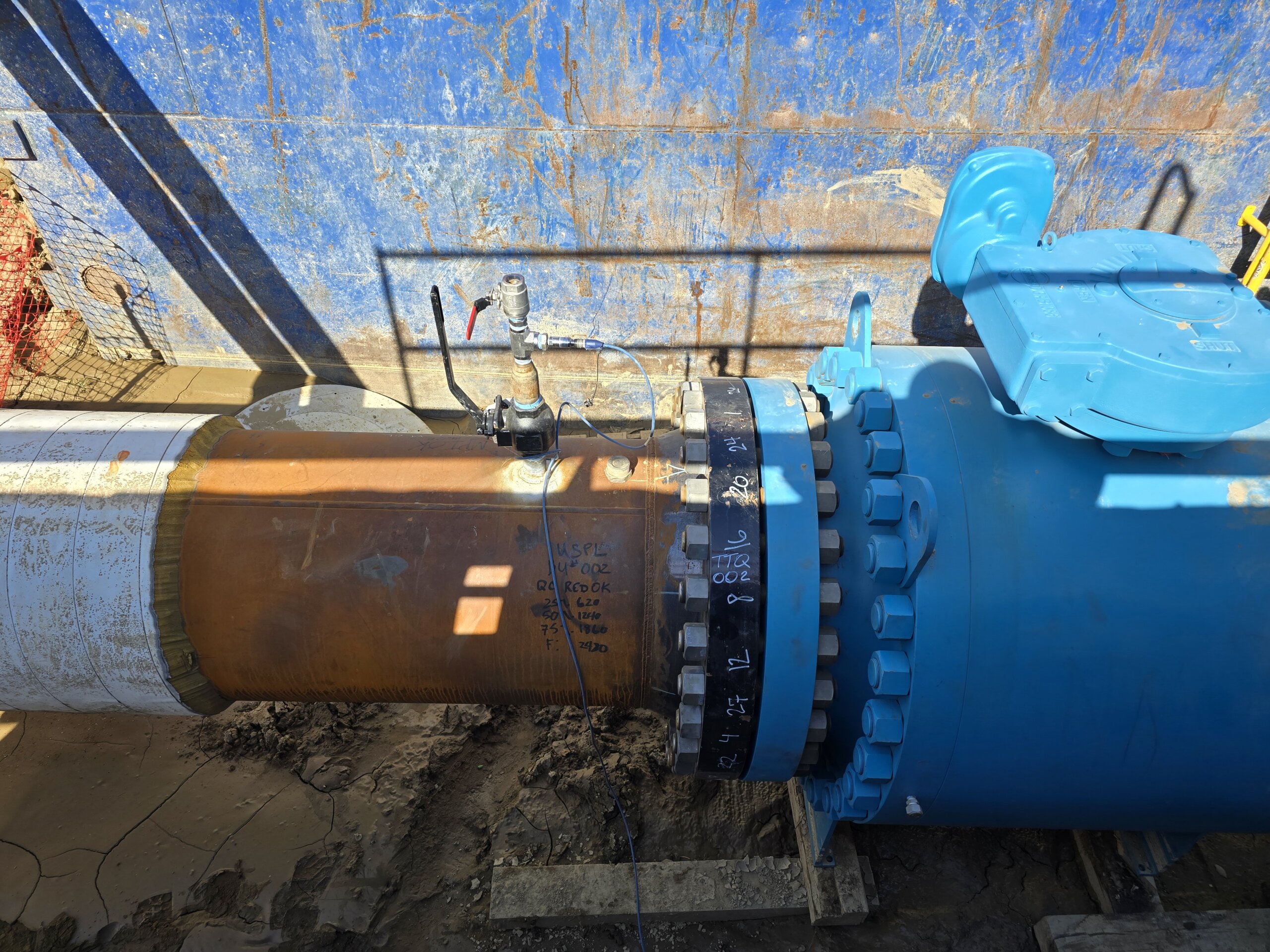
Autonomous pressure-based systems like PipeGuard flip the script. Installation is modular, fast, and designed to work within your existing infrastructure. Sensors are mounted directly to standard ½” to 2″ quarter-turn ball valves — no welding, no hot taps, no pipe modifications and no need to depressurize the line. One field crew can install and commission multiple Field Processing Units (FPUs) in a single day, often covering long pipeline stretches without requiring specialized equipment or extended site access.

Once installed, FPUs begin collecting high-resolution pressure data almost immediately. Each unit is pre-calibrated, GPS-synced and built to start streaming usable data within minutes.

Designed for the pipeline, not the control room

One of the biggest shifts in modern leak detection is that pressure-based systems are built for the same environments pipelines operate in and not just the comfort of a climate-controlled control room. These systems aren’t fragile, centralized setups that break down when infrastructure gets sketchy. They’re designed to be deployed across deserts, mountaintops and waterways — anywhere you’ve got pipe and pressure.

Each unit operates independently, without the need for sensor-to-sensor communication or a constant link to a central processor. Power flexibility is built-in: they can run on standard mains or go fully autonomous with solar-plus-battery configurations. Connectivity is just as adaptable. In networked areas, LTE provides seamless data transmission. In remote locations, satellite options like Starlink keep the data flowing.

It’s rugged, resilient and ready to operate wherever the pipeline goes, without skipping a beat.

Autonomous systems aren’t shackled to control rooms or limited to wired-in infrastructure. They’re designed to go where the pipe goes. That means deserts, tundra, offshore risers and other places where traditional CPM systems struggle just to stay online.

Every alert, audit-ready

When a leak happens, you don’t just get a notification. You receive a complete digital fingerprint of the event. Autonomous monitoring automatically captures a minute of pre-event and a minute of post-event high-resolution pressure data (sampled at 1,000 times per second), giving operators a clear before-and-after picture of what actually occurred in the line. Each event is geotagged with GPS coordinates accurate to within 20–50 feet and time-stamped using satellite-synchronized clocks to ensure traceable accuracy.

Need to show proof of performance? Satisfy a regulator? De-risk compliance reporting? Autonomous monitoring systems like PipeGuard gives you a crystal-clear, time-stamped paper trail — no spreadsheets, no SCADA digging and no interpretation required. It’s real-time transparency, baked in.

A final thought: Why it matters

Legacy systems were built for a different time — a time when pipelines were shorter, response expectations were slower, and nobody expected leak alerts to come with forensic-grade proof. That era’s over. Today, operators are managing sprawling infrastructure under tighter regulations, greater environmental scrutiny and with far less room for error.

What’s needed now isn’t another flowchart or delayed alarm. It’s a system that gives fast, accurate, and verifiable insight without waiting for volume loss, without false alarms and without a Ph.D. in hydraulic modeling to understand what’s going on. That’s what real-time, pressure-based, AI-validated leak detection brings to the table. Not as a concept. As a working reality — already deployed, detecting and proving its worth.

Because in this industry, “good enough” leak detection isn’t good enough anymore.

PipeGuard: It’s common sense

Designed to be operator-proof, not operator-dependent, PipeGuard functions autonomously in real-world environments without needing fiber, flow models or forensic deep dives to be effective. With a whole new level of operational transparency, agency and free time, operators can prioritize innovation, growth and stress-free family with friends and family instead of wasting resources on leaks that don’t exist. Or worrying about missing the leaks that do.
Experience total peace of mind

The real cost of false positives (and how to eliminate them from your pipeline leak detection strategy)

False positives are the definition of nonsense. They waste time, drain resources, damage trust and leave operators on a treadmill of reactivity. From compromised productivity to reputational risk, false positives burden operators not just financially — but emotionally, mentally and strategically. They hijack focus, slow innovation and normalize reactive operations. And the worst part? The industry continues to treat them as an unavoidable cost of doing business.

They’re not. False positives are entirely preventable; a systemic failure rooted in outdated tools that rely on indirect measurement, volume loss and generalized thresholds. Our pipeline leak detection technology replaces this reactive, rinse-and-repeat cycle with total clarity. Through AI, high-resolution pressure pulse data, real-time sampling (1,000 pressure points per second) and a proprietary library of verified leak and non-leak events, PipeGuard provides instant, data-backed insight into pipeline integrity.

When everything is on the line, why choose nonsense over common sense?

The tangible price tag of inaccuracy

When a leak alarm goes off, it triggers a cascade of costly actions: crew mobilization, operations review, communication protocols and possibly a full-blown shutdown — all before anyone even knows if the leak is real. A PHMSA-funded study found that legacy mass-balance systems generated a false alarm 1.47% of the time. That might not sound like much—until you’re operating a pipeline network that receives thousands of alerts each year. Scale it across a dozen assets, and you’re talking dollars spent investigating problems that don’t exist.

And the kicker? This is just the surface-level cost. Factor in vehicle wear, fuel costs, unnecessary use of safety equipment, and the opportunity cost of pulling teams away from scheduled maintenance and the real impact becomes painfully clear.

1.   Wasting resources dispatching crews for non-issues

Nonsense: Traditional pipeline leak detection

In most control rooms, the protocol is clear: a leak alert comes in, boots go out. That reaction is hardwired into standard operating procedures because the risk of ignoring a real leak is simply too high. But when your system cries wolf (again and again) those rapid responses start draining more than just diesel.

Crews are often deployed into remote or hard-to-access areas, sometimes spending hours or even days chasing down an event that wasn’t real to begin with. A single false positive can burn 16–48 hours from dispatch to conclusion, especially when the terrain is unforgiving, or access points are sparse. By the time the team wraps up their investigation, resets the system, and writes the report, that’s a full week’s worth of productivity gone — with nothing to show for it. Now multiply that by a dozen false positives a year, and you’re not just losing and money, you’re losing momentum.

Common sense: PipeGuard

Protecting your team’s time by only reacting to real threats. By detecting the difference between pressure noise and real leaks using a database of over 35,000 verified events, our pipeline monitoring software ensures operators allocate resources strategically — rather than sending teams on wild goose chases caused by routine pressure swings.

2.   Stalling productivity with unnecessary shutdowns

Nonsense: Traditional pipeline leak detection

Sometimes the most expensive consequence of a false positive isn’t a wasted truck roll — it’s an unnecessary shutdown. For operators managing high-consequence or regulated assets, even the possibility of a leak can trip alarms, trigger compliance protocols and bring the entire line to a grinding halt. It’s the “better safe than sorry” approach, and while it’s justified from a safety standpoint, it crushes throughput and productivity.

A single unplanned shutdown doesn’t just pause product flow — it sets off a chain reaction of downstream delays, missed delivery windows, and potential penalties from offtake agreements or service-level contracts. If you’re moving product for a refinery, utility or petrochemical plant, even a few hours of delay can have major financial and reputational consequences.

And shutdowns are only half the battle. Restarting is where things get really costly. Bringing a pipeline back online means rebalancing pressures across the network, re-priming pumps and valves, potentially purging or cleaning lines and ensuring pipeline integrity at every point before resuming operations. That takes time, labor and a whole lot of coordination — especially if you’re working across multiple control centers or remote terminals.

Common sense: PipeGuard

Monitoring 1,000 pressure samples per second and validating every pulse with built-in AI, PipeSense gives you immediate clarity. You’ll never shut down because of uncertainty—only for the real thing, and only when it matters. With our pipe leak detection technology, your pipeline will stay online, your team remains calm, and business keeps flowing.

3.   Engaging in a constant cycle of rework and retrofits

Nonsense: Traditional pipeline leak detection

When a pipeline leak detection system can’t be trusted, the natural reaction is to patch it. Tweak the thresholds. Add a sensor. Rewrite the logic. Anything to make it just a little less wrong.

We’ve seen so many times. Operators bolting on downstream flow meters just to cross-check alarms. Acoustic sensors wired in to pick up what pressure sensors missed. Custom SCADA rules built to suppress known nuisance triggers. Redundant software tools deployed in parallel because no one trusts the alerts coming from the primary system.

It’s a Frankenstein approach to pipeline integrity — one that’s never-ending. Each new workaround adds cost, complexity and risk. It clutters your architecture with layers of tech that weren’t designed to work together, increases your maintenance burden and introduces new points of failure. More sensors means more calibration. More software means more updates, licenses and security risks. And it’s all to compensate for the one thing your pipe leak detection system should be able to do on its own: accurately detect a leak.

Common sense: PipeGuard

Choosing pipeline leak detection software that’s fully autonomous. Our pipeline monitoring software installs directly into your existing valves and provides full coverage without needing extra flow meters, acoustic sensors or custom SCADA logic. No rework, no retrofits, no duct tape fixes. Just one streamlined system that does the job right the first time, and every time after that.


Keep learning about PipeGuard’s autonomous monitoring 


4.   Losing product because of unreliable detection

Nonsense:

When a pipeline leak detection system is riddled with false positives, the real danger isn’t just chasing ghosts — it’s missing what matters. Real leaks that go undetected (or are deprioritized due to alert fatigue) and cost operators hard dollars, fast. We’re talking about actual product lost, contractual fines and costly cleanup operations that cut straight into margins.

For liquid pipelines, even a minor undetected leak can mean thousands of gallons of lost product per day. For gas pipelines, the financial impact can escalate even faster.

There’s also the downstream impact. Missed leaks trigger unplanned shutdowns, delay deliveries and throw off system balance. This results in supply chain penalties, missed nominations or forced purchase agreements. For high-volume or regulated lines, those interruptions can snowball into millions in financial exposure before the root cause is ever found.

Common sense

Using pipeline monitoring software that leverages pressure pulse signatures validated by AI to catch both pinhole seeps and major ruptures in real-time. Our pipeline leak detection technology never drowns you in noise — so when it speaks up, you listen and act. Total precision and accuracy drastically reduce product loss and keep your margins predictable and strong.

5.   Inflating admin load for no reason

Nonsense: Traditional pipeline leak detection

There’s no such thing as a false positive that doesn’t leave a mark. Even if it turns out to be nothing, a flagged event often triggers reporting requirements — from internal logs to full-on incident documentation submitted to PHMSA or other local and federal regulators. Once the clock starts ticking, operators must show that they’ve investigated, responded, and mitigated even if the alert was wrong in the first place.

False positives often force teams into a formal sequence of event reviews, audit trail entries and detailed root cause analyses. If the line was paused — even briefly — there’s additional documentation. If stakeholders were notified? More forms, emails and explanations, all compounding into days of admin work that’s time-consuming and costly.

Worse still, repeated false alerts can create a history of non-events in your compliance file, raising eyebrows during audits and causing doubt among regulators. Over time, this undermines confidence in your system and can result in increased scrutiny, audit frequence or even mandated third-party validations.

Common sense: PipeGuard

Choosing a pipeline leak detection solution that ensures you’re always responding to actual leak events and keeps track of compliance needs automatically. Every pressure event is GPS-stamped, time-stamped and AI-verified the moment it happens, creating a complete digital audit trail that’s regulator-ready without the paperwork grind.

The hidden toll of false positives on operators, teams and communities

In control rooms across the industry, trust in leak detection systems is crumbling. And it’s not because operators don’t care — it’s because their systems keep getting it wrong. Every false positive forces them into a familiar, exhausting cycle: pause, assess, dispatch double-check, report. Then do it all over again tomorrow.

Each alert sets off a wave of mental gymnastics: Is it a leak? Is it the compressor? Is it just turbulence? Operators are left second-guessing every beep and blinking light, battling the tension between staying cautious and not overreacting. And the longer this continues, the harder it gets to act decisively.

We’ve heard it firsthand. Operators who say they dread the next alert — not because of the threat it signals, but because of the uncertainty it brings. One described the daily grind as a “slow erosion of confidence,” where even real leaks become harder to distinguish because their system has cried wolf too many times. Another shared how their team started logging alerts in a spreadsheet just to track how often they were wrong—because the system didn’t learn, so they had to. That’s not leak detection. That’s decision fatigue disguised as safety.

1.   Sacrificing peace of mind and quality of life

Nonsense: Traditional pipeline leak detection

For operators, a pipeline alert isn’t just a notification on a screen. It’s a weight. A what-if. A nagging sense that something might be wrong, even when everything seems fine. We’ve been in your boots: lying awake at night, wondering if the system caught that last pressure change. Waking up to another alert at 3 a.m. and debating whether to get dressed or trust that it’s just another false alarm. Always on edge. Always waiting for the other shoe to drop.

And when you’re off the clock? You’re not really off. That family camping trip gets cut short because the phone won’t stop buzzing. The fly rod stays in the truck because you’re too worried about what’s going on back at the terminal. Even when you try to relax, your mind stays in the control room — replaying recent alerts, double-checking decisions and bracing for the next ping. When your pipeline leak detection system can’t be trusted, you don’t just lose operational confidence; you lose the ability to fully live your life.

Common sense: PipeGuard

Implementing a pipeline monitoring software tool that ensures you can trust what you see and act without having to do any mental gymnastics—without hesitation. PipeGuard rebuilds the broken relationship between operators and pipe leak detection technology by removing guesswork and restoring confidence through real-time pressure pulse validation and AI-backed accuracy. You’ll be more present when you’re spending time with friends and family, and maybe even be able to catch a concert after the workday ends for once.

2.   Jeopardizing community trust and external relationships

Nonsense: Traditional pipeline leak detection

Pipeline leak detection isn’t just about protecting assets — it’s about protecting people. The pipelines you manage run through real communities. Past schools, under farms and alongside neighborhoods. The moment your monitoring system falters, it’s not just your operations that feel the shock. The people nearby feel it too.  A single false alarm can trigger unnecessary evacuations, disrupt traffic or make the evening news. A missed leak is even worse — drawing headlines, investigations and community outrage. Either way, public trust takes the hit. And once it’s gone, it’s a long road to earn it back.

Operators have told us about the pressure—the weight of knowing their system might not catch everything. The unease of wondering, “Is our community actually protected—or are we hoping the system does what it says it will?” That’s not operational peace of mind. That’s fear disguised as protocol.

From the community’s side, the reaction is just as visceral. Every false alert erodes credibility. Every misstep becomes a datapoint. And the moment your public assurance sounds more like a guess than a guarantee, you lose control of the narrative. Your pipeline is no longer seen as secure.

Common sense: PipeGuard

Protecting more than just the pipe — proactively safeguarding the life that surrounds your operations. With our pipeline monitoring software, not only will you catch leaks faster and rest assured you’re doing everything in your power to run your organization responsibility, you’ll pass along your peace of mind to your neighbors. PipeSense gives you the confidence to stand behind your system and the clarity to show communities you’ve got their back.

3.   Driving wedges between teams

Nonsense: Traditional pipeline leak detection

One false positive can set off a domino effect of doubt, finger-pointing and technical firefighting that ripples across your organization. Control room operators begin second-guessing every dashboard readout. Field crews stop trusting alerts. Engineers start patching holes that shouldn’t exist. And IT? They’re stuck combing through logs trying to figure out what actually happened — and whether the data can even be trusted.

When your data isn’t trusted and your tools don’t align, decision-making becomes a minefield. Teams stop communicating and start compensating. And instead of running a lean, unified operation, you’re navigating a patchwork of conflicting data, redundant alerts and half-measures.

Common sense: PipeGuard

Relying on pipeline monitoring software that ensures everyone is always on the same page. With one unified system that works across operations, field teams, engineering and IT, there’s no need for workaround scripts, extra meters or second-guessing the alerts. Our pipeline leak detection software speaks clearly, so your teams can act decisively.

4.   Inviting vulnerabilities and cyber risk

Nonsense: Traditional pipeline leak detection

When legacy pipeline leak detection systems don’t deliver clarity, operators don’t just accept the noise—they compensate for it. They stack solutions. They buy bolt-ons. They plug in third-party sensors, cloud connectors, acoustic validation layers and analytics dashboards just to second-guess what their primary system should have told them. What starts as a quick fix turns into a tangled web of vendors, tools and tech that no one truly owns — or fully trusts.

Some operators use half a dozen different pipe leak detection platforms just to validate one alert. Each one brings its own integration quirks, conflicting data formats and maintenance demands. Worse, every layer widens your attack surface, adding new access points for bad actors and new headaches for your IT and cybersecurity teams.

Common sense: PipeGuard

Streamlining your tech and minimizing risk with one seamless pipeline monitoring software. PipeGuard plugs directly into existing infrastructure and delivers real-time clarity—without bolt-ons, vendor sprawl or unnecessary exposure. That means fewer systems to manage, fewer backdoors to secure and fewer tools for your IT team to vet. It’s security by simplicity, and it starts with getting pipe leak detection from one source.

5.   Sacrificing Progress, Stalling Innovation

Nonsense: Traditional pipeline leak detection

There’s a hidden tax that other pipeline leak detection systems collect — and it’s paid in opportunity. Every false alarm throws your team into reactive mode. Instead of planning for the next upgrade, you’re stuck troubleshooting yesterday’s noise. Time that should go toward innovation is spent triaging symptoms of a system that can’t get its story straight.

You spend months fine-tuning CPM logic to reduce false alert volume — only to shift the problem, not solve it. Technicians pour time into patchwork sensors to validate data that should’ve been accurate in the first place. Every fix becomes a new to-do, every false positive a distraction from what you really need to get done.

Meanwhile, improvement projects stall. Training gets pushed. Digital transformation slows to a crawl. You’re not optimizing workflows or building resilience — you’re stuck in maintenance mode, chasing ghosts instead of driving forward. The system was supposed to make your job easier. Instead, it’s become the job.

Common sense: PipeGuard

Using the time you spent constantly tuning, second-guessing and chasing false positives to stay ahead of the competition. With our pipeline leak detection technology, operators can focus on implementing even more new technologies to streamline operations and investing time into big-picture initiatives once side-lined by chaos.

The bottom line: PipeGuard eliminates false positives and restores pipeline integrity

False positives don’t just cost money — they cost momentum. Our pipeline leak detection technology fixes that at the source. By capturing 1,000 pressure samples per second, PipeGuard creates a live fingerprint of your pipeline’s behavior. Every pressure pulse is validated against a proprietary database of over 35,000 known events — so your system doesn’t just detect anomalies, it knows exactly what they mean.

Valve closure? Compressor kick? Real leak? The AI can tell the difference, and it doesn’t need a human to double-check its work. You get instant clarity, zero guesswork and the power to act fast—without second-guessing your data or stalling your operations. It’s pipeline leak detection that actually detects leaks. And it’s how operators finally get their time, trust and momentum back.

Keep exploring common sense 

Hands-Off, Always On: PipeGuard’s Autonomous Leak Monitoring Technology

Hands-Off, Always On: PipeGuard’s Autonomous Monitoring Technology

Pipelines don’t take breaks. They don’t sleep, pause for lunch or call in sick. They run 24/7, pushing millions of gallons of critical resources across vast distances. But while pipelines don’t rest, operators shouldn’t have to stay glued to a screen, second-guessing every alert and scrambling to verify false positives.

PipeGuard eliminates the need for round-the-clock supervision, delivering true set-it-and-forget-it monitoring that works in the background for unparalleled pipeline monitoring software.

Unlike traditional pipeline leak detection systems that require constant tuning, manual intervention, and expert oversight, PipeGuard is tailored to your pipeline’s unique operating conditions. Whether it’s day or night, remote or urban, PipeGuard is always on, always watching, so you don’t have to be.

Legacy pipeline leak detection systems are failing. Here’s why:

For decades, computational pipeline monitoring (CPM) systems have relied on outdated mass balance or volume balance techniques to detect leaks.  The problem? These pipeline leak detection systems are reactive, not proactive. They require operators to sift through a constant stream of alerts, many of which turn out to be false alarms, while struggling to pinpoint actual leaks before they escalate. And the real kicker? These outdated pipeline leak detection solutions require endless maintenance, recalibration, and oversight.

False positives and missed leaks: The worst of both worlds

One of the biggest flaws of conventional pipeline leak detection systems is their limited sensitivity. They’re notoriously bad at detecting small leaks, meaning a minor failure could go unnoticed for hours or even days — long enough for a small issue to turn into an environmental disaster. At the same time, traditional negative pressure wave systems overcompensate by triggering excessive false positives, mistaking normal pipeline operations, valve movements and pressure changes for potential leaks. The result? Operators spend more time chasing ghost alarms than addressing real threats.

A waiting game no operator can afford

Even when a real issue occurs, legacy pipeline leak detection systems are painfully slow. Many require hours — or even days — to detect and confirm a leak, putting operators in an impossible position: shut down operations without certainty or risk environmental and regulatory consequences. And when a leak is finally identified? There’s no precise location data, forcing teams to hunt through miles of pipeline, wasting valuable time and resources.

The stats speak for themselves

A PHMSA-funded study found that traditional pipeline monitoring software had a 1.47% false positive rate and only 79% accuracy in detecting leaks. That means one in five leaks went undetected, while operators wasted time responding to alarms that turned out to be nothing. PipeGuard’s pipeline monitoring software flips this broken system on its head, delivering 99.99% accuracy with a near-zero false positive rate — ensuring that operators only respond to real threats.

PipeGuard monitoring: A new era of pipeline monitoring

PipeGuard monitoring delivers a fully independent, highly sensitive and extremelyaccurate solution that operates quietly in the background—no constant oversight required. Simply put, our approach to pipeline leak detection works smarter, not harder. At the core of our next-generation pipeline monitoring is a powerhouse team of cutting-edge technology: ultra-high-speed pressure sensing, AI-driven pattern recognition and real-time data processing.

With PipeGuard, operators get real-time, high-confidence alerts they can trust — without constantly babysitting an archaic and needy monitoring system. Because the best pipeline monitoring software isn’t the one that demands constant attention. It’s the one that works so seamlessly, you forget it’s even there.

Detects what others miss

Traditional monitoring systems wait for a measurable loss of product before raising an alert — but by then, the damage is already done. PipeGuard . Instead of relying on slow and outdated mass balance calculations, PipeGuard detects rapid, short-duration pressure pulses — negative pressure waves — that occur the moment a leak starts.

PipeGuard samples pipeline pressure at 1,000 times per second (1kHz), capturing even the smallest pressure disturbances that conventional systems would miss. Whether it’s a small leak or a full-scale rupture, PipeGuard catches the event in real-time before it has a chance to escalate. This isn’t just a tweak to traditional methods. It’s a fundamental shift in how pipeline leak detection systems operate.

Validates every alert in real-time

False positives are the Achilles’ heel of traditional pipe leak detection. Valve changes, compressor starts, and routine pressure fluctuations often trigger unnecessary alarms, forcing operators to waste time chasing non-issues. PipeGuard eliminates this problem by combining high-speed sensing with AI-driven pattern recognition.

Our pipeline leak detection system continuously analyzes pressure pulses against a proprietary database of over 35,000 real-world pressure events, using multiple state-of-the-art data analysis to determinewhether an anomaly is a true leak or just normal pipeline activity. Operators aren’t left second-guessing every alert — when PipeGuard notifies you, you know it’s real.

Makes every second count

Traditional monitoring systems can take hours — or even days — to detect and confirm a leak, putting operators in an impossible position: shut down operations without certainty or risk regulatory and environmental fallout. PipeGuard eliminates this dilemma by identifying leaks within 2 to 5 minutes of their occurrence.

Unlike other pipeline leak detection systems that require sustained product loss before raising an alarm, PipeGuard detects leaks the moment they happen using instantaneous pressure pulse analysis. The result? Faster detection means faster response times, minimal product loss, and fewer regulatory risks—all with zero downtime in between.

Power’s real-time location precision

Detecting a leak is only half the battle. Knowing exactly where it is determines how quickly it can be fixed. Many pipeline leak detection and monitoring systems provide rough estimates, forcing operators to search through miles of pipeline to find the issue. PipeGuard eliminates this inefficiency with pinpoint precision, locating leaks within 20 to 50 feet of their exact position.

Instead of losing valuable hours (or days) searching for the problem, operators can immediately deploy repair crews to the exact site, slashing downtime and reducing operational costs.

Built by engineers who have been in your boots

Pipeline leak detection and monitoring should make operators’ lives easier — not harder. PipeGuard was built by engineers who know the realities of the job: the long hours, the high stakes, and the constant pressure to keep operations running safely and efficiently. Every feature of PipeGuard is designed to remove obstacles, not create them. With plug-and-play adaptability, seamless deployment, fully autonomous recalibration and a best-in-class user interface, our pipeline monitoring software is designed to provide peace of mind without the headache.

Plug-and-play adaptability

No one has the time (or budget) for expensive infrastructure overhauls, drawn-out installations, or a mile-long list of setup requirements. PipeGuard is built for seamless, drop-in deployment. Whether your pipeline carries liquids or gas, operates at high or low pressure, or runs above or below ground, PipeGuard integrates effortlessly — without disruption.

The system connects directly to standard threaded pipeline connections (½ inch to 2 inches) and can be installed at any above-ground access point in minutes. Unlike legacy leak detection systems that demand weeks of installations and retrofits, PipeGuard is ready to work the moment it’s implemented, delivering instant, always-on monitoring with zero downtime and no complex configuration.

One system, total coverage

Many pipeline leak detection systems require additional flow meters, fiber optics or acoustic sensors — adding layers of complexity, cost, and maintenance. PipeGuard eliminates the need for extra pipeline hardware. Because our pipeline monitoring software is powered by high-speed pressure pulse technology, AI-driven pattern recognition and real-time data processing, PipeGuard eliminates the need for extra pipeline hardware beyond simple pressure sensors and monitors your entire pipeline network with just one streamlined solution that delivers insights without the clutter.

No babysitting or recalibration required

Most pipeline leak detection and monitoring systems demand constant attention: endless fine-tuning, recalibrations, and manual adjustments just to stay accurate. PipeGuard’s smarter, fully autonomous approach that continuously learns and adapts without operator intervention.

From the moment it’s installed, PipeGuard is constantly monitoring normal pipeline operation. Our pipeline monitoring software constantly analyzes the pipeline’s unique operating conditions, building a dynamic baseline of normal pressure behavior. As it gathers more data, system sensitivity is fine-tuned, filtering out routine fluctuations while staying hyper-focused on detecting real leaks. It eliminates guesswork and human intervention, so operators can focus on running their pipeline—not maintaining their leak detection system.


Pinpoint precision anytime, anywhere

Pipelines don’t stick to city grids. They stretch across deserts, mountains, tundra

, and offshore platforms—places where traditional monitoring systems fail due to lack of power and connectivity. PipeGuard thrives where other pipeline leak detection systems can’t.

Powered by solar energy with battery backup, our pipeline monitoring software runs continuously in even the most remote locations — no power lines required. PipeGuard operates over LTE networks or integrates with

satellite communication to ensure connectivity, even where cell service is nonexistent. Operators don’t have to waste time or money building new infrastructure just to enable monitoring. PipeGuard is built to work anywhere — right out of the box.

A dashboard built for operators, not IT teams

A monitoring and pipeline leak detection system is only useful if operators can understand and act on the data it provides. Unfortunately, many pipeline leak detection solutions overwhelm teams with raw data, confusing charts, variables to “fine tune” and IT-heavy interfaces that require specialized training just to interpret. PipeGuard solves this problem with a clean, intuitive dashboard that gives operators instant clarity and full situational awareness.

Instead of drowning in information, operators get exactly what they need, when they need it:

  • A real-time, at-a-glance overview of pipeline status with no blind spots.
  • Pinpointed leak locations with GPS accuracy within 20-50 feet, so teams know exactly where to send repair crews.
  • AI-validated alerts that filter out false positives, so operators can trust every notification.
  • Automatic, time-stamped event logs for easy regulatory compliance and audit readiness.

Operators can also customize their alert preferences, setting notification methods that best fit their team’s needs. Whether in the control room, out in the field or working remotely, teams can receive alerts via desktop, mobile, or SMS. And with cyber security friendly flexible deployment , operators can monitor pipeline conditions from anywhere — without being tied to a physical control center.

One fixed-rate annual rate

PipeGuard monitoring keeps it simple with a straightforward, all-inclusive pricing model. No surprise upcharges. No costly add-ons. No unexpected service fees. Just reliable, always-on monitoring that doesn’t come with asterisks.

Operators pay one predictable price that covers everything—from installation and calibration to ongoing

support.

Simply protected, simply secure

In an era where data breaches and cyber threats are on the rise, operators need a pipeline monitoring software that doesn’t just detect leaks — but also protects sensitive data.

PipeGuard is built with enterprise-grade security protocols, safeguarding operator data from unauthorized access, cyberattacks and leaks. With flexible deployment options, operators can choose cloud, local, or hybrid hosting – ensuring compliance with the strictest cybersecurity policies while keeping data within their control. End-to-end encryption ensures that all transmitted data remains secure, while strict authentication measures prevent unauthorized access.

Audit-ready, all the time

Regulatory compliance shouldn’t mean drowning in paperwork. Many operators spend countless hours manually piecing together reports, ensuring every pressure fluctuation and leak response is properly documented. PipeGuard removes this administrative burden by automatically generating time-stamped, audit-ready event logs for every detected anomaly.

Every event is logged with precise GPS location data and a digital, real-time record, ensuring compliance is seamless and stress-free. No more scrambling for documentation. No more guesswork on event history. Just a fully automated system that keeps operators ahead of the paperwork — without lifting a finger.

The future of pipeline monitoring starts here

Pipeline safety and efficiency depend on having the right pipeline leak detection system — one that detects leaks in real-time, eliminates false positives and requires zero manual oversight. PipeGuard redefines pipeline monitoring with cutting-edge

leak detection solution that pinpoints leaks the moment they occur and sends operators accurate, granular insight so they can act immediately and confidently.

The next generation of pipeline leak detection isn’t just faster—it’s smarter. And with PipeGuard’s advanced leak detection technology, operators can stop reacting and start proactively protecting their pipelines with reliable, always-on monitoring that works when and where they need it most.

How advanced pipeline leak detection eliminates costly, time-consuming recalibrations

We call it how we see it. Recalibration is a full-time job disguised as routine upkeep. Every pump startup, valve shift or pressure swing sends traditional pipeline leak detection systems spiraling. Sensitivity drops. Accuracy erodes. And suddenly, your crew’s back in the field, re-tuning a system that was never designed to keep up in the first place.

It’s a cycle that drains more than time. Between truck rolls, downtime, labor costs and lost focus, recalibration has become the silent tax operators pay just to keep legacy systems marginally functional. And the kicker? Even after all that work, false positives are considered part of life and actual leak events sneak by unnoticed.

It all boils down to nonsense vs. common sense. Instead of pouring time and resources into a system that feeds you inaccuracy in return, PipeGuard learns and autonomously recalibrates using real-time pressure pulse sensing, GPS time-syncing and an AI engine trained on over 35,000 real-world pressure events. While benefiting from a pipeline leak detection system that’s exponentially more precise, you can use your time building the future instead of handholding a tool you can’t count on in the first place.

Why legacy pipeline leak detection systems still rely on calibration

Traditional pipe leak detection systems weren’t built to think; they were built to react. Most rely on mass balance or volume balance calculations, governed by static thresholds and pre-set calculations of what “normal” looks like. The problem? Pipelines don’t do normal. They surge, shift, expand and contract with every operational change. Start a pump? Pressure spike. Switch products? Flow rate changes.

So, when those static assumptions no longer match real-world conditions, legacy pipeline leak detection systems start to glitch out and suddenly routine operations trigger constant alarms. The only fix? Manual recalibration — over and over again.

Recalibrations might keep the system limping along, but they’re impossible to scale. Every adjustment requires boots on the ground, operator expertise and (far too often) delays in operations. Multiply that across a network of assets and suddenly your budget’s drained, your team’s exhausted and your system still can’t tell the difference between a pinhole leak and a pressure swing.

Quit your babysitting gig with PipeGuard

You’ve got better things to do than nurse a leak detection system through every pressure bump, product change or seasonal shift. Legacy tools demand constant handholding — manual baselines, fine-tuning and field visits just to keep them from crying wolf. PipeGuard was built to break that cycle. From day one, our pipeline monitoring software trains itself on your pipeline’s unique behavior, filters out the noise and adapts in real time so your crew get back to higher-value work.

Short-term: Plug in. Move on.

Traditional pipe leak detection systems demand a manually entered baseline before they can get to work. PipeGuard builds its own.

Before PipeGuard goes live, our technology enters a two-week commissioning phase. This live-action training camp allows the pipeline monitoring software to study your pipeline and create a 360-degree understanding of your pipeline’s behavior in real-time. Studying every nuance, fluctuation and signature movement, each unit captures pressure data at 1,000 samples per second.

But this isn’t passive learning. PipeGuard actively runs simulated leak scenarios using leak-release manifolds designed to mimic real-world leaks that are most probable under your operating conditions. These events aren’t hypothetical. They’re field-simulated pressure pulses that train PipeGuard in the environment that matters most.

This flood of high-speed pressure data is used to train custom onboard signal filters (algorithms that live directly on each PipeGuard unit). Each device independently analyzes pressure data in real-time, recognizing the difference between a noisy valve and a negative pressure wave worth acting on. The result? A smart, streamlined pipeline leak detection system trained specifically for your pipeline’s quirks. No ongoing calibration, no guesswork and absolutely no “we’ll fix it in post.”

By the time commissioning is complete, your pipeline leak detection system is fully trained and battle tested. Rather than moving forward with a generic pipeline leak detection system calibrated by limited data, you have a pipeline integrity solution that learns your pipeline’s fingerprint in high resolution.

Long-term: Trust it. Forget it.

Our pipeline monitoring software isn’t just a quick learner. It’s a permanent student of your pipeline’s behavior. Once deployed, it shifts from setup mode into continuous optimization, using every operational fluctuation as an opportunity to sharpen its accuracy. It doesn’t just log events; it interprets them in context — recognizing how your system behaves under load, how it reacts to environmental shifts and how subtle variances build a more complete picture of normal.

PipeGuard keeps evolving in the background, refining its detection logic to stay ahead of changes without ever falling behind. It adapts when new compressors come online, when seasonal flow rates shift and when maintenance introduces new variables.

All without your crew lifting a finger.

How it works: Constant evolution

Our pipeline monitoring software isn’t dependent on a control room or master server to function — it’s decentralized by design. Each field unit is its own first responder, independently monitoring pipeline pressure for short-duration pulses that signal an actual leak event. Not a slow product loss, but an instantaneous negative pressure wave that moves faster than traditional pipeline leak detection systems can register.

The sensor picks up that signature, syncs its timestamp via GPS and stores a full two-minute window of data (one minute before, one minute after). After the individual field unit has completed its triage, information gets pushed to the central system for deeper analysis.

Then, our machine learning gets to work. Each event is transformed into a 3D frequency signature and compared against a growing library of over 35,000 real-world pressure pulse patterns. Leaks, valve chatter, control system noise, compressor surges — you name it, our pipeline leak detection technology remembers and files it. So, when a signal matches the known fingerprint of a leak, the alert is instant and accurate. If it’s background noise, it gets tossed. But most importantly, in both instances, each event and nonevent become a part of PipeGuard’s ever-changing blueprint for pipeline integrity.

What this really means for operators

PipeGuard was designed with one job in mind: to make your life less chaotic and your leak detection system less needy. When your pipeline monitoring software can think for itself, you’re not stuck playing technician every time the weather shifts or the flow rate bumps.

The real costs of false positives 

Recalibration runs? Cancelled

No more rolling trucks to nudge sensitivity. No more techs stuck babysitting finicky systems. PipeGuard learns your pipeline once and keeps adapting — automatically, in real-time — so your crew can get back to real work.

What to look forward to

  • A streamlined workload
  • More bandwidth (and a happier team)
  • A line item labeled “savings” on your next OPEX report

More uptime, fewer disruptions

While legacy systems fumble during flow changes and restart cycles, PipeGuard keeps running, learning and monitoring without skipping a beat. You stay live and your pipeline keeps humming.

What to look forward to

  • Higher productivity across your team
  • Fewer operational slowdowns
  • Reliable, round-the-clock performance

Fewer field hours (and big OPEX wins)

When recalibration isn’t part of the equation, your team isn’t spending hours in the field doing work that could’ve been avoided. Fewer truck rolls, less red tape and no downtime just to keep your detection system semi-functional.

What to look forward to

  • A lighter load on your crew
  • Less logistical chaos
  • A noticeable drop in operating expenses

Rock-solid consistency

Whether it’s a change in flow rate, a new compressor profile, fluctuating product types or extreme environmental conditions, PipeGuard adapts in real-time. Our pressure modeling evolves with your pipeline, maintaining pinpoint accuracy no matter what’s happening above or below ground.

What to look forward to

  • No need for seasonal recalibrations
  • Instant adaptation to operational shift
  • One less system to second-guess

Precision you can trust

PipeGuard doesn’t just detect pressure changes — it understands them. By validating each alarm against a library of 35,000+ real-world signatures, our pipeline leak detection technology always knows the difference between an actual leak and everyday turbulence.

What to look forward to

  • Virtually eliminating false positives
  • Sharper situational awareness
  • Sleeping soundly through the night

Goodbye, recalibration. Hello, peace of mind

We’re barreling towards 2030. It’s time to stop babysitting your pipeline leak detection system.

With autonomous pressure modeling, GPS-synced sensing and an AI engine trained on 35,000+ real-world events, PipeGuard adapts and evolves to become a faster, more granular and more precise system.

The real win for operators? A system that demands less and delivers more.

You’re not just stepping away from recalibration. You’re entering a new era of pipeline integrity. One where your monitoring system works quietly in the background, and you never have to second-guess the accuracy of your alarms.

Don’t take our word for it.

Schedule a demo