Background
Pipeline operators live under constant pressure to detect leaks, needing to act quickly before they become safety and environmental disasters. Yet for many operators, the bigger daily challenge isn’t missing a leak: it’s dealing with the thousands of false alarms triggered by conventional leak detection systems.
Every case of a false positive comes with a list of costs – emergency response mobilizations, partial or full line shutdowns, field verification testing, and the erosion of trust between control room staff and their leak detection technology. Over time, operators grow skeptical because the system that’s supposed to protect them becomes the system they no longer believe in.
Reliable pipeline monitoring shouldn’t create more noise and uncertainty. It should give operators information they can trust and act on.
PipeSense’s PipeGuard solution was engineered to end this cycle.
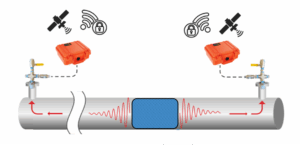
By combining advanced leak detection methods with advanced machine learning, PipeGuard differentiates between harmless transients and true anomalies – helping turn pipeline data into reliable, actionable information for operators.
The Hidden Cost of False Positives
False positives may not spill product or make headlines, but they drain resources and erode operator confidence just the same. Industry operators estimate that a single false alarm can cost tens to hundreds of thousands of dollars, depending on pipeline line size, product type, and response protocols. The various costs of false positives can be split into different categories:
1. Operational Disruptions: When a leak alarm is triggered, operators must act fast. Many response protocols require immediate flow reductions or full line shutdowns until the alert can be confirmed. Even short interruptions can have significant economic consequences:
- Lost throughput and delayed deliveries.
- Contractual penalties and/or customer challenges.
- Pump station cycling and restart costs.
For a high-throughput crude line, a single false alarm can result in $50,000–$200,000, or more, in lost revenue.
2. Field Verification Costs: False positives also initiate costly field mobilizations. Operators may dispatch aerial patrols, ground crews, or third-party inspectors to verify pipeline integrity. Each “no-leak-found” event compounds frustration and skepticism, consuming valuable manpower that could be used for maintenance or optimization.
3. Erosion of Trust (The “Boy Who Cried Wolf” Effect): Over time, a pattern of false alarms leads to alert fatigue. When the leak detection system “cries wolf” too often, control room staff start second-guessing alarms. This behavioral drift increases risk: a real leak might go unaddressed because operators assume it’s another false positive.
This is perhaps the most dangerous cost of all, the loss of confidence in a critical safety system.

Breaking the Cycle: PipeGuard’s Design Philosophy
PipeGuard was built from the ground up to tackle these challenges head-on.
- Adaptive Signal Intelligence: PipeGuard uses adaptive analytics to distinguish between benign operational transients (like pump startups, valve operations, or batching changes) and actual leak signatures. The system “learns” normal operating behavior, ensuring that it does not react to normal operation while remaining sensitive to potential anomalies.
- Hydraulic Precision: At the core of PipeGuard is the use of advanced analytics that allows it to differentiate between normal and abnormal hydraulic pressure signatures. Unlike systems that rely solely on threshold deviations, PipeGuard continuously compares real-time data with its dynamic model to isolate meaningful anomalies.
- Operator Confidence, Restored: Because of its advanced leak detection methods, PipeGuard provides actionable alarms, not noise. Operators can trust that when the system alerts, it’s for a reason. That confidence transforms monitoring from simply generating alarms into providing information operators can use to make decisions.
Quantifying the Value of Fewer False Positives
Reducing false positives doesn’t just improve confidence, it directly improves profitability. Based on industry averages and real-world operator feedback, the economic value of PipeGuard’s accuracy can be summarized as follows:
| Cost Driver | Legacy Leak Detection Systems | PipeGuard | Savings |
|---|---|---|---|
| False Alarms per Month | 5–10 typical (stable lines) | <1 | 80–95% reduction |
| False Alarms per Month (Dynamic Lines) | 50–100 typical | <2 | 95–99% reduction |
| Verification Cost per Event | $20,000–$50,000 | ~$0 (none needed) | Up to $600K/year |
| Lost Throughput During False Shutdowns | $25,000–$150,000 per event | Near-zero | $1M+/year |
Restoring Confidence in Leak Detection
A leak detection system is only as effective as the operator’s belief in it. The “boy who cried wolf” scenario is one of the most pervasive, and dangerous, cultural challenges in the industry. When false alarms are frequent:
- Operators hesitate to shut down or mobilize.
- Real leak response may be downplayed or delayed.
- Teams lose trust not only in the system but in the process itself.
PipeGuard reverses that trend by making accuracy predictable and consistent. Operators regain confidence that each alarm is meaningful, not arbitrary. That trust saves time, protects assets, and, most importantly, keeps people and the environment safe.
Because ultimately, reliable monitoring isn’t about how many alarms a system can generate. It’s about whether operators can trust the alarms that matter.
Reliable. Actionable. Trusted.
False positives have long been accepted as a cost of doing business in pipeline operations.
And our question is why?
PipeGuard proves that this cost is avoidable. By combining precision filtering, advanced analytics and an adaptive learning approach, PipeGuard helps operators separate meaningful events from normal pipeline activity, reducing unnecessary noise while providing the confidence to take immediate action.
That’s what reliable, actionable pipeline monitoring should deliver: fewer distractions, clearer information, and greater confidence when an alarm occurs.
PipeGuard doesn’t just detect leaks, it helps make every alarm matter.