Hidden Connections, Hidden Risks: Uncovering Unknown Farm Taps in a Texas Pipeline Segment

Explore how PipeTest and PipeScan were deployed to help a major operator uncover previously unknown farm taps and dresser couplings during hydrostatic testing, ensuring the pipeline was brought safely back into service. 


Project Background

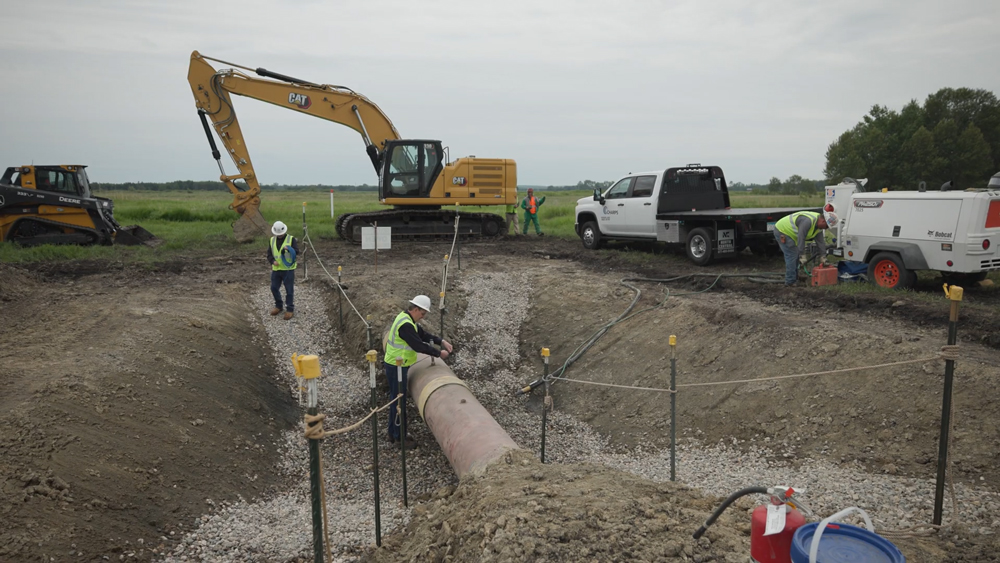
In April 2025, PipeSense was contracted by a U.S.-based pipeline operator to monitor the hydrotest of a pipeline segment in Texas. The scope was straightforward: supplement the hydrotest contractor’s efforts with PipeSense’s PipeTest monitoring system, ensuring accurate leak location data was captured during the fill, stabilization, and test-hold phases.  

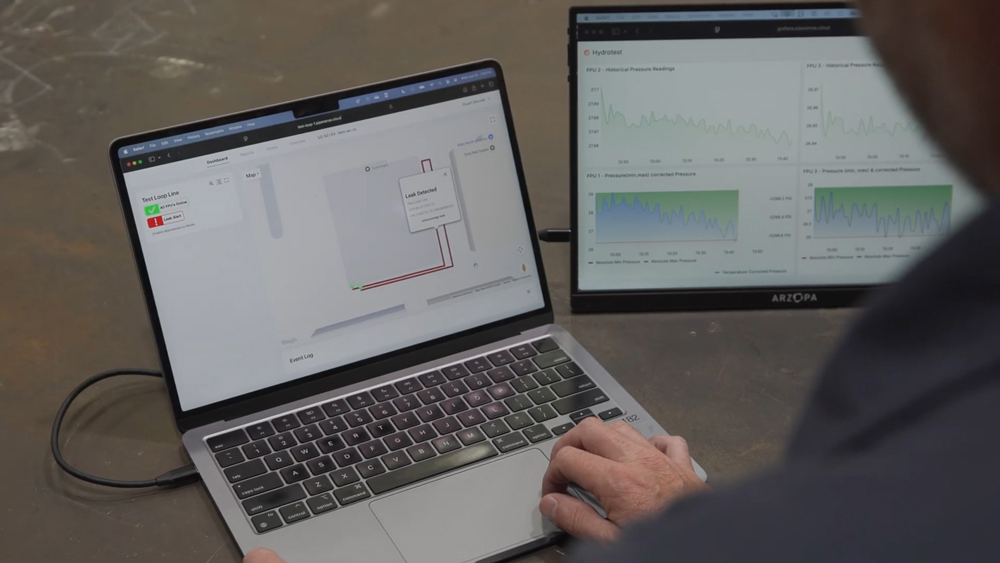
PipeSense deployed Field Processing Units (FPUs) at strategic points along the line, each outfitted with high-speed pressure sensors capable of capturing pipeline data at 1,000 samples per second. These FPUs, linked to PipeSense’s patented analytics, allowed real-time monitoring of bore pressure fluctuations and precise identification of anomalies. 

Unlike traditional hydrotesting, which may confirm only whether a line holds pressure, PipeTest provides pinpoint leak location, reducing guesswork and excavation. The system can identify new leak events in seconds and locate pre-existing leaks during fill or dewater, often with an accuracy of less than 100 feet. 

Commencing what was expected to be a routine integrity validation, our on-site engineers quickly discovered deeper issues: pressure loss and unexplained leakage, suggesting hidden infrastructure. 


Deployment & Early Signs of Trouble 

As the line was filled and stabilized, anomalies emerged. Pressure drops of approximately 10 psi per hour were recorded, beyond expected temperature-related fluctuations. The PipeTest system flagged multiple points of concern, correlating with potential leak signatures. 

Operators initially suspected small weeps, but PipeSense’s data analysis pointed to something more: previously undocumented farm taps and dresser couplings acting as leak points. 

Introduced as a convenience in the mid-20th century, farm taps are direct service lines connected to transmission pipelines, typically feeding individual homes or farms. Never designed to be permanent fixtures in a transmission environment, farm taps now present three categories of challenges today:  

1 – Regulatory Ambiguity – Who owns the tap? Who maintains it? PHMSA has clarified expectations, but many older taps remain in limbo.

2 – Safety Risks – If improperly abandoned, a closed farm tap can still contain pressurized gas or weakened fittings that may leak under stress.

3 – Record Gaps – Many operators rely on outdated KMZ or GIS maps. In cases where taps were installed without formal documentation, records are incomplete or inaccurate.

When an operator believes their line is fully mapped and compliant, discovering hidden farm taps mid-project can derail schedules, add repair costs, and create regulatory exposure. 


Locating the Hidden Taps 

Using a combination of real-time monitoring and offline analysis, PipeSense identified multiple precise GPS coordinates where anomalies suggested hidden connections. Each of these points corresponded to farm taps or dresser couplings that had not been captured in the operator’s KMZ mapping files. 

By locating these features, PipeSense provided actionable intelligence that enabled repairs before the final test-hold was conducted. 


Repair, Retest, and Results 

Once the farm taps and couplings were exposed and repaired, the operator re-pressurized the line. With PipeSense continuing to monitor, the pipeline successfully held during the eight-hour hydrotest hold period. 

What could have been a prolonged investigation with trial-and-error excavation was resolved quickly thanks to targeted data. As a result, the operator not only passed the hydrotest but also left the project with a more accurate and complete picture of its infrastructure. 


Broader Implications for Operators 

This case study underscores the broader issue facing many operators: you can’t manage what you don’t know exists. Legacy infrastructure, like farm taps and undocumented fittings, can: 

  • Cause failed hydrotests, delaying project timelines. 
  • Create compliance risks if regulators identify missing records. 
  • Pose safety hazards if left in place, particularly under elevated test pressures. 


The Technology Advantage 

PipeSense’s approach bridges this gap by: 

1 – Mapping the Unknown – Identifying taps and fittings not present in KMZ or GIS files.

2 – Providing Actionable Data – Delivering precise GPS coordinates to guide excavation crews.

3 – Enhancing Compliance – Helping operators align asset records with PHMSA and state regulatory expectations. 

PipeSense’s advantage lies in its out-of-band architecture and ability to operate independently of SCADA systems. This makes it particularly effective for hydrotesting, pigging, and isolated test segments, with benefits including: 

  • High-Frequency Sensing: Captures micro-changes in pressure that traditional systems overlook. 
  • Advanced Analytics: Proprietary algorithms distinguish between normal stabilization effects and true leak events. 
  • Field Deployment Capabilities: FPUs can be rapidly deployed in remote environments without permanent infrastructure. 

These capabilities not only solve immediate project challenges but also help operators improve long-term asset integrity management. 


Conclusion 

What once seemed like a small convenience has, decades later, become a serious risk factor for operators striving to meet today’s safety and regulatory standards. PipeSense’s work with the operator and hydrotest company demonstrates how technology can close that gap – turning uncertainty into certainty, hidden risks into known assets, and failed tests into successful outcomes.  

For operators across North America, the lesson is clear: unknown farm taps and fittings don’t have to remain hidden. With PipeSense, you can find them, fix them, and move forward with confidence. 

Underground Infrastructure: Stopping hydrate plugs

How operators can pinpoint pipeline blockages and restore flow

Businesses operating within the midstream sector of the oil and gas industry have an exhaustive list of obstacles to contend with. Some, like challenging weather or evolving regulations, are external. Other obstacles, though, are strictly internal – including your approach to asset integrity and management.

How are you ensuring the stability and structural longevity of your pipeline? Are you confident that practices are in place to certify that systems are protected and that any obstructions or deposits can be quickly and efficiently dealt with – without completely sidelining productivity?

PipeSense and EnControl Partner to Deliver Advanced Leak Detection Across U.S. Gas Pipelines

PipeSense and EnControl Join Forces to Tackle Gas Pipeline Leaks with AI-Enhanced Technology

As environmental and regulatory pressures grow, pipeline operators are seeking smarter, more proactive ways to detect leaks and protect their infrastructure. In a major step toward this goal, PipeSense, a leader in AI-driven pipeline monitoring and leak detection, has announced the successful deployment of three advanced monitoring systems in collaboration with EnControl, a trusted third-party control room provider to the oil, gas, and hydrogen sectors.

Together, the two companies are setting a new standard for real-time leak detection, compliance, and operational resilience.

Smart Technology Meets Strategic Operations

Working closely with EnControl, PipeSense deployed its PipeSentry™ and PipeGuard™ systems to:

  • Two natural gas systems located in Kansas and Michigan

  • One natural gas liquid system in Tennessee

These projects mark a significant expansion of PipeSense’s U.S. footprint, bringing continuous, real-time leak monitoring to critical natural gas assets in the Midwest and Southern United States.

Learn more about how PipeGuard works and why it’s trusted to deliver accurate detection with no false positives.

Meeting Compliance Head-On with ASV Control & 24/7 Monitoring

In addition to around-the-clock surveillance, PipeSense delivered automatic shut-in valve (ASV) control at one site through its custom-configurable technology. This capability allows for immediate response to leak detection, supporting regulatory requirements such as those outlined by PHMSA and the EPA.

According to EnControl President Brandon Clemons:

“Our partnership with PipeSense enables us to deliver advanced leak detection and response capabilities. As regulations tighten, EnControl is committed to staying ahead—helping clients not just remain compliant, but truly secure.”

Explore PHMSA’s regulatory standards to understand how leak detection technology like PipeSense’s is helping operators stay compliant and accountable.

A Growing Track Record of Pipeline Protection

These deployments come on the heels of a year of strong growth for PipeSense, including installations across high-consequence areas (HCAs) in the Permian Basin, California, Illinois, Kentucky, Minnesota, and Michigan. With each system deployed, PipeSense continues to prove that technology, when combined with experience and urgency, can change outcomes.

“Pipeline leaks cost operators and the economy billions,” said PipeSense President & CTO Stuart Mitchell. “We’re proud to work with EnControl on projects that will make a lasting difference and show the real-world value of our technology.”

Making an Impact Where It Matters Most

As operators face increasing scrutiny over emissions and environmental risk, partnerships like this underscore the importance of innovation in safeguarding both infrastructure and communities. PipeSense’s solutions provide:

  • 24/7 AI-powered monitoring for rapid leak identification

  • Minimal false positives, reducing unnecessary downtime

  • Automatic system shutdown options in critical scenarios

  • Compliance-ready technology that meets evolving standards

Together, PipeSense and EnControl are leading the way in redefining pipeline integrity—not only through what they build, but through the reliability they deliver to operators across the nation.

Want to Learn More?
Visit PipeSense.com to explore our suite of leak detection technologies or contact in**@*******se.com to see how we can support your pipeline’s performance, compliance, and future.

Meet Josh Holmes: Driving Client-Centered Growth as VP of Sales at PipeSense

At the intersection of innovation and integrity, PipeSense is rapidly emerging as a leader in AI-driven pipeline monitoring and leak detection. As the company scales its mission to protect critical infrastructure and empower pipeline operators with smarter technology, it’s also building the leadership team to match.

Enter Josh Holmes, recently appointed Vice President of Sales, who brings with him a strong foundation in sales strategy, safety technology, and client relationship development. His arrival marks a key milestone in PipeSense’s ambitious growth journey, aligning a customer-first mindset with a bold, technology-led vision.

A Career Built on Relationships, Results, and Responsibility

Josh’s background in the safety industry has shaped a unique ability to build high-performing sales teams, create scalable strategies, and foster enduring client trust.

“Most of my career has been spent understanding what it means to deliver safety—real safety—for people, systems, and businesses,” Josh explains. “Joining PipeSense is a chance to take that commitment further by helping clients protect their pipeline assets with game-changing technology.”

From his earliest days in the role, Josh recognized that PipeSense solutions—such as PipeSentry™ and PipeGuard™—bring immediate, measurable impact to operators both in the U.S. and internationally.

Bringing the Right Solutions to the Right People

Josh’s approach is grounded in competitive urgency, a mindset instilled early in his career that fuels the company’s proactive sales culture. His goal is to ensure PipeSense’s groundbreaking monitoring technologies reach those who need them most—pipeline operators managing risk in increasingly complex environments.

“Our solutions are best-in-class,” Josh says. “We owe it to our customers to bring them forward with urgency—because these innovations make a real difference. That sense of purpose is what drives me.”

A Vision Aligned with Innovation

PipeSense stands apart by delivering flexible, AI-enabled leak detection systems that minimize false positives, provide real-time insights, and integrate across a wide range of operational conditions and pipeline types. But sales at PipeSense isn’t just about promoting a product—it’s about sharing a shared vision of progress and protection.

“We’re not just trying to meet expectations. We want to consistently exceed them,” Holmes notes. “We’re crafting custom solutions, engaging directly with operators, and being accountable at every step.”

Explore how PipeSense’s solutions work to see how technology and trust go hand in hand.

No Roadmap? No Problem.

Holmes embraces PipeSense’s trailblazing status. With no playbook to follow, the company is setting its own standards—something Josh sees as both a challenge and an opportunity.

“At PipeSense, we’re paving a path where none existed before. That takes clarity, consistency, and confidence. Every part of my past experience—from the mentors who guided me to the teams I’ve led—has helped prepare me for this moment.”

His leadership philosophy boils down to a simple principle: “Relationships matter, and trust is earned.

Looking Ahead: The PipeSense Mission

In the next three to five years, Josh envisions PipeSense as the undisputed leader in pipeline monitoring and leak detection. Backed by a team of innovators, engineers, and customer success leaders, the company is primed to expand across North America and beyond.

“Our team is passionate and driven. We know what’s at stake, and we’re aligned in our purpose. It’s an honor to be a part of that kind of momentum.”

Meet Joe Van Vynckt: Driving the Future of Pipeline Monitoring as CEO of PipeSense

As the global energy industry rapidly evolves, so too must the tools and technologies that support safe, efficient, and reliable pipeline operations. At the forefront of this shift is Joe Van Vynckt, CEO of PipeSense, a fast-rising name in advanced pipeline monitoring solutions. With more than 15 years of cross-sector leadership experience spanning construction, utilities, finance, and business strategy, Van Vynckt brings a pragmatic and innovative approach to pipeline integrity.

In addition to his role at PipeSense, Joe serves as CEO and Owner of Charps, a leading U.S.-based pipeline construction and maintenance company. His insight and involvement were critical in forming PipeSense and bringing its vision to life—a vision built on AI-backed monitoring, real-time data insights, and uncompromising performance.

Strategic Roots: From Construction to Innovation

Joe’s journey to PipeSense was a natural extension of his work at Charps, where he saw firsthand the growing complexity—and opportunity—within the pipeline sector.

“As the pipeline industry evolves to meet the needs of modern oil, gas, and utilities operations, we need smarter, more adaptable technologies,” he explains. “At PipeSense, we’ve built the infrastructure, team, and technology to meet that need head-on.”

The result: a dynamic organization focused on helping operators optimize performance, reduce risk, and minimize environmental impact—without disruption to existing operations.

A Mission to Solve the Right Problems

At the heart of PipeSense’s mission is a simple but powerful goal: to deliver real solutions to real challenges. Joe emphasizes that this means deeply understanding what operators are facing day-to-day.

“Pipeline operators need solutions that are built around their environments, not the other way around,” says Van Vynckt. “With our combined industry knowledge and our flexible product suite, we tailor every deployment to improve real-world performance and meet regulatory demands.”

This tailored approach is what sets PipeSense apart—technology that fits the pipeline, not technology that asks the pipeline to fit it.

The Technology Advantage

PipeSense solutions—including the PipeSentry™ and PipeGuard™ systems—leverage cutting-edge artificial intelligence (AI) to deliver round-the-clock monitoring and actionable insights. Unlike legacy systems, PipeSense’s technologies are:

  • Product-agnostic: effective regardless of the pipeline contents

  • Condition-flexible: optimized for varied terrain, pressure, and flow environments

  • Highly accurate: reducing false positives to near-zero

  • Rapidly deployable: easily installed without operational downtime

By fusing AI analytics with operator needs, PipeSense is enabling proactive asset management in a way that enhances safety, sustainability, and profitability.

Explore how PipeSense works and why it’s quickly becoming the trusted name in pipeline performance.

Building Confidence. Delivering Performance.

As an industry leader and entrepreneur, Van Vynckt knows success comes from delivering consistently—and from building trust.

“At PipeSense, everything we do is based on solving problems, exceeding expectations, and making our clients’ jobs easier,” he says. “When you combine that mentality with proven, intelligent technology, the results speak for themselves.”

The company’s solutions are already in use across key regions, including the Permian Basin, Gulf Coast, and Midwestern pipeline corridors, helping operators align with regulatory changes.

Looking Ahead: A Global Vision

Where does Van Vynckt see PipeSense in the next three to five years?

“Simply put, we want to be the leading global provider of pipeline monitoring and leak detection,” he states. “It’s ambitious, but I believe we have the right people, the right products, and the right mindset to make it happen.”

With a leadership team grounded in decades of operational excellence and driven by data-backed solutions, PipeSense is poised to lead the pipeline integrity sector into a new era.

Stuart Mitchell Joins PipeSense as President & CTO: Driving the Future of Leak Detection Technology

Industry Pioneer Stuart Mitchell Joins PipeSense to Lead Technological Transformation in Leak Detection

PipeSense, a fast-emerging innovator in pipeline monitoring and integrity solutions, proudly announces the appointment of Stuart Mitchell as President and Chief Technology Officer (CTO). With nearly three decades of experience in the pipeline integrity management sector of the oil and gas industry, Mitchell brings unmatched expertise in developing, scaling, and commercializing cutting-edge leak detection and monitoring technologies.

With operations headquartered in Houston, Texas, and a growing portfolio of advanced AI-based products, PipeSense is set to revolutionize leak detection standards in both domestic and international pipeline markets.

A Career Built on Innovation

Since 2018, Mitchell has been at the forefront of developing and commercializing novel pipeline leak detection systems. His deep technical knowledge, paired with entrepreneurial acumen gained from founding and growing multiple technology startups, makes him uniquely positioned to guide PipeSense’s next phase of growth.

“I saw a major gap in the industry,” Mitchell shares. “Operators had limited reliable options for real-world leak detection. I wanted to change that by building solutions that not only work in theory, but thrive in complex, real-world pipeline conditions.”

His leadership reinforces PipeSense’s mission: delivering practical, high-accuracy leak detection with minimal false positives—technologies that operators can count on when safety and compliance are on the line.

What Sets PipeSense Apart?

Mitchell is clear: flexibility, accuracy, and customer alignment are what differentiate PipeSense from other providers.

“Our solutions can be deployed across multiple pipeline types, operational scenarios, and product types—without requiring compromises. Our AI-driven technology accurately locates leaks and avoids damaging false alarms, helping clients optimize uptime while reducing risk.”

PipeSense’s flagship technologies, such as PipeGuard™ and PipeSentry™, are designed to integrate seamlessly into diverse infrastructures. Backed by real-time data analytics and machine learning, these tools give operators powerful insights and unmatched precision.

Explore how PipeGuard works and how it’s helping operators across the U.S. safeguard their critical infrastructure.

The Path Forward: Delivering for the Industry

Looking ahead, Mitchell envisions PipeSense becoming the go-to partner for operators seeking intelligent leak detection and efficiency-enhancing technologies.

“In three to five years, I want PipeSense to be the first name operators turn to when they’re serious about protecting pipeline assets, improving operations, and meeting regulatory demands,” he says.

At its core, the PipeSense strategy revolves around partnership, trust, and execution. “Brands grow when they deliver,” says Mitchell. “Our promise is to deliver leak detection that simply works—and to be a true partner to every operator we serve.”

Why This Matters

The U.S. pipeline network spans over 2.6 million miles, and with rising regulatory requirements and public scrutiny, ensuring pipeline safety, efficiency, and environmental responsibility has never been more critical.

PipeSense is addressing this challenge head-on by combining world-class engineering with modern technology. With Stuart Mitchell at the helm, the company is positioned to lead a new era of pipeline integrity innovation—where accuracy meets accountability.

PipeSense Named Finalist for Best Digital Transformation at Gulf Energy Excellence Awards

PipeSense Earns Major Recognition for Digital Innovation in Pipeline Monitoring

In a powerful acknowledgment of its game-changing technologies, Houston-based PipeSense has been named a finalist for the Best Digital Transformation category in the prestigious Gulf Energy Information Excellence Awards. The nomination underscores PipeSense’s emergence as a leader in AI-powered leak detection and pipeline monitoring, less than a year into full operations.

The announcement, made by Gulf Energy Information on May 17th, places PipeSense alongside established industry innovators — validating the critical role of its PipeSentry product suite in transforming how pipeline operators detect and respond to leaks and inefficiencies.

Transforming Pipeline Safety with PipeSentry

PipeSense’s PipeSentry solution combines advanced machine learning, real-time analytics, and sensor-based technologies to pinpoint leak locations with industry-leading accuracy — often within 50 feet, compared to more than 100 feet using conventional methods.

This digital-first approach helps pipeline operators:

  • Detect leaks faster and with greater precision

  • Identify blockages and flow irregularities before they escalate

  • Extend asset life through predictive maintenance

  • Align with stringent regulatory requirements for emissions monitoring

As part of a broader trend toward digitally enabled pipeline integrity management, PipeSentry directly supports industry efforts to comply with upcoming PHMSA regulations aimed at reducing fugitive methane emissions. For context, the Pipeline and Hazardous Materials Safety Administration (PHMSA) mandates enhanced leak detection systems under 49 CFR §195.134.

A Mission-Driven Team with Century-Strong Expertise

PipeSense is not just another startup. Backed by over a century of combined experience in pipeline engineering and integrity management, the team blends deep industry knowledge with forward-thinking digital capabilities.

As CEO Joe Van Vynckt explains:

“From day one, our mission has been to make a lasting positive impact on the industry, the environment, and our communities. This nomination gives us a greater platform to show what we are capable of and why we are fighting back against pipeline leaks.”

By partnering with global leaders like Sonomatic and Charps, PipeSense is leveraging deep technical collaboration to deliver robust, scalable leak detection solutions across North America and beyond.

Looking Ahead to the Excellence Awards

The 2024 Gulf Energy Excellence Awards ceremony will take place on October 9th in Houston, Texas, gathering the brightest minds and most transformative technologies in the oil and gas sector. As PipeSense competes in the Best Digital Transformation category, its nomination signals a promising future for digital-first solutions in the midstream market.

Learn More

To discover how PipeSentry can elevate your pipeline integrity program or to explore a demo, visit www.pipesense.com or contact the team at in**@*******se.com.

Elevating Pipeline Performance: How PipeSense Is Leading with AI and IoT

How AI and IoT Are Redefining Pipeline Monitoring

In today’s energy landscape, safety, efficiency, and environmental responsibility are non-negotiable. That’s why cutting-edge technologies like artificial intelligence (AI) and the Internet of Things (IoT) are rapidly becoming essential tools in pipeline integrity management.

In the May 2024 issue of World Pipelines, PipeSense President and CTO Stuart Mitchell shared an in-depth look at how disruptive technologies are shaping the future of pipeline monitoring and leak detection. His article, “Elevating Pipeline Performance with Advanced AI,” makes it clear: the future of pipeline safety isn’t just digital—it’s intelligent.

Read the full article in World Pipelines

Real-World Results: From 106ft to 50ft Leak Location Accuracy

The feature includes insights from a recent PipeSense project monitoring a 100-mile section of a client’s pipeline. By leveraging real-time sensor data and advanced machine learning algorithms, the PipeSense system reduced the predicted leak location from 106 feet down to just 50 feet.

This drastic improvement in accuracy doesn’t just represent a technical milestone—it directly translates to faster incident response, minimized environmental damage, and substantial cost savings for operators.

Why AI and IoT Matter for Pipeline Operators

From oil and gas to water and chemical pipelines, the demand for smarter infrastructure is growing. Here’s how PipeSense’s AI and IoT-based systems deliver measurable value:

  • Enhanced leak detection accuracy

  • Real-time performance insights

  • Predictive maintenance with historical data modeling

  • Reduced risk to people, property, and the environment

  • Improved compliance with regulations like PHMSA’s §195.134

This intelligent pipeline monitoring approach supports proactive decision-making while aligning with the industry’s goals of decarbonization and operational resilience.

Supporting the Energy Transition with Smarter Infrastructure

PipeSense’s innovations don’t operate in a vacuum—they’re part of a larger ecosystem advancing industrial digital transformation. According to McKinsey & Company, digital tools like AI and IoT are essential for oil and gas operators aiming to optimize efficiency and reduce emissions as they navigate the energy transition.

By integrating AI into pipeline operations, companies are seeing tangible benefits in uptime, safety, and sustainability—three metrics that define success in today’s high-stakes energy environment.

PipeSense Opens Cutting-Edge Pipeline Leak Detection Test Facilities in Houston and Minnesota

PipeSense Expands Capabilities with New Pipeline Leak Detection Facilities in Houston and Clearbrook

HOUSTON, TX – In a bold step forward for the future of pipeline safety, PipeSense has officially opened the doors of two new state-of-the-art testing facilities. Located in Houston, Texas, and Clearbrook, Minnesota, the facilities mark a major milestone in PipeSense’s mission to revolutionize pipeline monitoring and leak detection through advanced technology, AI-driven analytics, and real-world validation.

As global pressure mounts for safer, smarter energy infrastructure, these facilities reflect the company’s deep commitment to both innovation and regional investment.

Accelerating R&D with Real-World Testing Environments

PipeSense’s Houston facility features a fully operational 4-inch Continuous Test Loop, uniquely designed to simulate active leak scenarios. This system enables real-time client demonstrations and custom leak point selection—ensuring transparency, trust, and technical proof of performance.

In Clearbrook, Minnesota, PipeSense has constructed a bespoke 24-inch Pipeline Test Rig, designed specifically for evaluating and showcasing real-time pig-tracking and inline inspection technologies—a vital capability for midstream operators managing large-scale pipelines.

By simulating realistic field conditions, both facilities allow PipeSense’s engineering teams to test, refine, and continuously evolve both hardware and software solutions.

Investing in Pipeline Safety Across North America

With a strategic presence in both the Gulf Coast energy hub and the Midwestern pipeline corridor, PipeSense’s new facilities serve as dual anchors for nationwide service delivery and regional support.

This geographic reach is critical as the industry prepares for stricter federal mandates such as the PHMSA Leak Detection and Repair Rule, which requires hazardous liquid pipeline operators to implement more effective leak detection systems.

According to API 1130, effective leak detection is not only about fast response times—it also hinges on continuous monitoring, advanced algorithms, and site-specific adaptability. PipeSense’s hands-on testing environments directly support these standards, enabling operators to deploy field-ready, regulation-compliant solutions with confidence.

A Message from PipeSense Leadership

“The opening of our world-class testing facilities will allow us to embark on a period of continued investment into the technologies we provide as part of our advanced pipeline leak monitoring solutions,” said Stuart Mitchell, President and CTO of PipeSense. “The research done at our facilities will help to ensure we are continually at the forefront of technological advancement and AI integration. We look forward to welcoming clients to our facilities and offering live demonstrations to showcase our capabilities.”

Navigating the PHMSA Leak Detection Mandate: What Pipeline Operators Need to Know Before October 2024

Navigating Industry Change: The PHMSA Leak Detection Mandate

A major shift is underway in the U.S. pipeline industry. Starting October 1, 2024, all operators of hazardous liquid pipelines must comply with a new federal leak detection mandate issued by the Pipeline and Hazardous Materials Safety Administration (PHMSA) under 49 CFR 195.134.

For many pipeline owners and operators—particularly those managing aging infrastructure—this marks a critical turning point in pipeline safety, operational risk management, and regulatory compliance.

What the New PHMSA Leak Detection Rule Requires

Under § 195.134, hazardous liquid pipelines transporting single-phase liquid constructed before October 1, 2019, must be equipped with effective leak detection systems by the looming October 2024 deadline.

Key Requirements:

  • Scope: Applies to all onshore liquid pipelines operating in a single phase (liquid without gas).

  • Compliance Deadline:

    • Pipelines constructed before October 1, 2019 must comply by October 1, 2024.

    • Pipelines constructed on or after October 1, 2019 should have already complied by October 1, 2020.

  • CPM Systems: Any new or replaced Computational Pipeline Monitoring (CPM) components must be designed per API RP 1130 section 4.2, ensuring real-time, high-fidelity leak monitoring.

  • Exemptions: Offshore gathering and regulated rural gathering lines are excluded from this rule.

Why This Matters: Compliance, Safety & Liability

Failure to comply with the PHMSA leak detection requirements can result in hefty fines, operational shutdowns, and environmental liabilities. Beyond the legal ramifications, operators also face reputational and safety risks if pipeline leaks go undetected or unresolved.

In an era where public and environmental safety are paramount, real-time leak detection is no longer a luxury—it’s a legal and operational necessity.

Enter PipeGuard: Advanced Leak Detection Without the Guesswork

To support operators during this transition, PipeSense offers PipeGuard, a next-generation pipeline integrity solution designed for full compliance and peace of mind.

Why Operators Choose PipeGuard:

  • 24/7 Real-Time Monitoring – Catch leaks as they happen, no matter the cause.

  • Precise Leak Localization – Reduce downtime and environmental impact with accurate data.

  • False-Positive Protection – Smart alerts delivered only when they matter.

  • Flexible Notification Options – Via SCADA, email, SMS, and web apps.

  • Cybersecure and Scalable – Built to meet the most rigorous IT and operational standards.

PipeGuard seamlessly integrates with existing pipeline infrastructure and is ideal for operators with complex networks across North America—from the Permian Basin to the Midwest and Gulf Coast.

Countdown to Compliance: Don’t Wait Until Q4

With less than six months to meet the federal deadline, pipeline operators must act quickly to:

  • Assess current compliance status

  • Identify gaps in existing leak detection coverage

  • Implement and test approved CPM systems

PipeSense is actively working with operators nationwide to prepare for this regulatory milestone. Whether you manage legacy assets or oversee new builds, we can help ensure full compliance while optimizing safety and uptime.